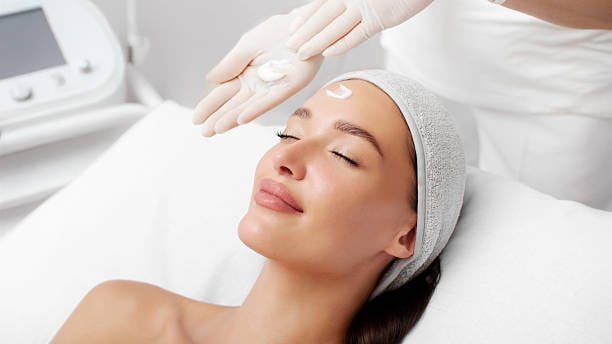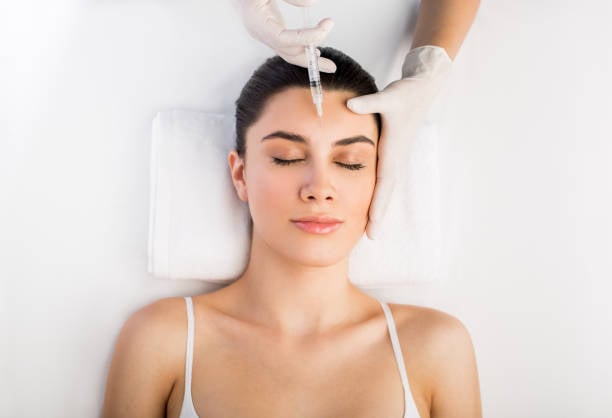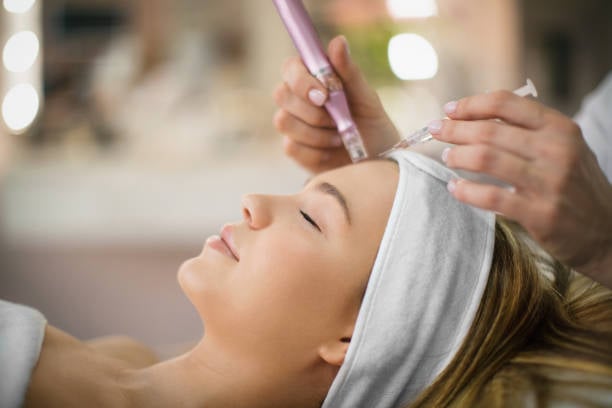
Plasma pen treatments have gotten a lot of attention for tightening small areas of lax skin and improving the appearance of fine lines without surgery. Scroll through social media, though, and you'll quickly discover that the term “plasma pen” can describe very different devices, providers, and treatment standards. That's where patients need to be careful. …
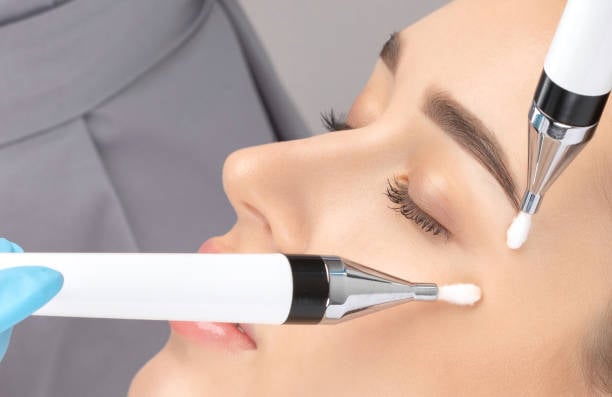
Plasma pen treatments have gotten a lot of attention for tightening small areas of lax skin and improving the appearance of fine lines without surgery. Scroll through social media, though, and you’ll quickly discover that the term “plasma pen” can describe very different devices, providers, and treatment standards.
That’s where patients need to be careful.
At Skin Theory Aesthetics in Phoenix, we use Subnovii Advanced Plasma Technology, an FDA-cleared Class II prescription electrosurgical device. It isn’t the same thing as an inexpensive fibroblast pen purchased online or included with a weekend training course.
The device matters. Your skin type matters. The area being treated matters. Most of all, the person holding the device matters.
Before booking a plasma pen treatment in Phoenix, ask questions. A good provider should welcome them.
Featured Snippet: What Should You Ask Before Getting Plasma Pen Treatment?
Before booking a plasma pen treatment, ask which device is being used, whether it has FDA 510(k) clearance, who will perform the procedure, how your skin tone affects pigmentation risk, what recovery actually looks like, and whether plasma treatment can realistically achieve your goals. Provider experience and patient selection matter as much as the device.
First, What Exactly Is a Plasma Pen Treatment?
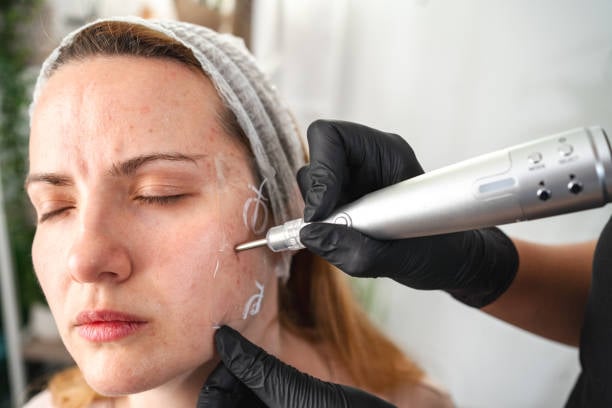
A plasma pen is an energy-based device that generates an electrical arc between the device tip and the skin.
Subnovii works without the electrode physically touching the skin. Its FDA documentation describes the device as generating an ionized electrical arc through the air between the electrode tip and the skin.
This produces controlled points of tissue injury and coagulation.
During treatment, you’ll typically see a pattern of tiny dots placed strategically across the treatment area. These develop into the characteristic small crusts people often associate with plasma treatments.
As the area heals, the goal is improvement in selected areas of skin laxity, fine lines, and texture.
You’ll sometimes hear the treatment referred to as fibroblasting because collagen-producing fibroblasts are part of the skin’s wound-healing and remodeling response. But we prefer explaining what the device actually does rather than leaning too heavily on marketing terminology.
Is Subnovii FDA Approved?
Here’s where terminology matters.
Subnovii Advanced Plasma Technology received FDA 510(k) clearance in 2020 as a Class II prescription electrosurgical cutting and coagulation device and accessory. Its FDA-listed intended use is the removal and destruction of skin lesions and coagulation of tissue.
That’s not the same as saying Subnovii has specific FDA approval for a “non-surgical eyelid lift,” wrinkle removal, or every cosmetic use you may see advertised online.
It’s also not the same as a generic company being “FDA registered.”
If you’re comparing plasma pen clinics in Phoenix, ask for the actual device name, not simply whether they use “FDA technology.”
Why Choosing a Plasma Pen Provider Matters
Plasma treatment intentionally creates controlled thermal injury.
That alone should tell you this isn’t something to choose based on the cheapest Groupon.
Published literature has raised concerns about commercially available fibroblast pens, particularly devices that aren’t FDA-regulated. Reported potential complications include burns, scarring, and pigmentation changes.
The goal isn’t to make plasma treatment sound frightening. It’s to put it in the correct category.
This is an aesthetic procedure where device quality, technique, anatomy, skin tone, treatment intensity, aftercare, and patient selection all matter.
Here are the questions we’d want answered before allowing someone to treat our own skin.
1. What Plasma Device Are You Actually Using?
Don’t settle for “a fibroblast pen” or “plasma technology.”
Ask for the manufacturer and model.
At Skin Theory Aesthetics, we use Subnovii Advanced Plasma Technology. FDA records identify Subnovii as a Class II prescription device cleared through the 510(k) process.
Its FDA documentation describes a handheld, battery-powered device that creates an ionized electrical arc between the electrode and skin without the electrode contacting the skin.
That’s very different from assuming every product marketed online as a “plasma pen” has gone through the same regulatory process.
Ask Your Provider:
- What is the exact device name?
- Who manufactures it?
- Is it FDA-cleared?
- What is its 510(k) number?
- What is the FDA-cleared intended use?
- Is the device prescription-use only?
A knowledgeable provider should be able to answer without getting defensive.
2. Who Will Actually Perform My Treatment?
The logo printed on the handpiece doesn’t perform your procedure.
The provider does.
Ask who will be holding the device, what their clinical background is, and how much experience they have treating your particular area.
This becomes especially important around delicate anatomy such as the eyes.
At Skin Theory Aesthetics, treatments are performed within a physician assistant-led aesthetic practice under the care of Heather Starks, PA-C. That medical background matters when evaluating candidacy, facial anatomy, healing risks, and whether another treatment would make more sense.
Good Questions to Ask Include:
- Who performs the treatment?
- What is their medical training?
- How frequently do they perform Subnovii treatments?
- How much experience do they have treating my specific area?
- Who do I contact if I have a problem during recovery?
- What happens if I develop an unexpected reaction?
You’re not being difficult by asking.
You’re being a good patient.
3. Can I See Before-and-After Photos of Your Own Patients?
Manufacturer photos are helpful for understanding what’s possible.
They don’t tell you what this provider can do.
Ask to see before-and-after photos from actual patients treated by the practice, especially patients with concerns similar to yours.
Look beyond the dramatic transformation.
Pay attention to:
- Symmetry
- Natural contours
- Texture
- Pigmentation
- Scarring
- How the treatment area blends with surrounding skin
- Whether lighting and camera angles appear consistent
And ask when the “after” photograph was taken.
Plasma treatment involves a healing and remodeling process. A photo taken shortly after treatment doesn’t tell you the same thing as one taken after the skin has had time to settle.
4. Am I Actually a Good Candidate for Plasma Pen Treatment?
This is the question that should come before “How much does it cost?”
Not everyone is an ideal candidate.
Your provider should evaluate factors such as:
- Skin tone
- Fitzpatrick skin type
- History of hyperpigmentation
- Melasma
- Keloid or abnormal scar history
- Current skin condition
- Previous procedures
- Medications
- Medical conditions
- Sun exposure
- Treatment area
- Degree of laxity
- Ability to follow aftercare
- Your expectations
If your consultation feels like a sales presentation rather than a candidacy assessment, pay attention to that feeling.
5. How Does My Skin Tone Affect Plasma Pen Risk?
Any procedure that intentionally creates inflammation can potentially affect pigmentation.
Post-inflammatory hyperpigmentation is particularly relevant in patients with darker skin tones and people who already know that every pimple, scratch, or burn tends to leave a dark mark. Research consistently shows that PIH is more common and can be more persistent in darker skin.
That doesn’t mean someone should automatically be excluded based solely on a Fitzpatrick number.
It does mean the conversation needs to be more thoughtful than, “Plasma is safe for every skin color.”
Tell Your Provider If:
- Acne routinely leaves dark marks
- You’ve developed pigmentation after previous procedures
- You have melasma
- You tan easily
- You’ve recently tanned
- You’ve experienced hypopigmentation
- You have a history of difficult scarring
An ethical provider may recommend a different treatment when the risk-to-benefit ratio isn’t favorable.
Sometimes “I don’t think this is the right treatment for your skin” is the answer you should trust most.
6. How Do You Treat Delicate Areas Around the Eyes?
The eye area is one of the reasons many patients become interested in plasma treatment in the first place.
It’s also an area where caution matters.
Skin around the eyes is thin, swelling can be noticeable, and the anatomy leaves little room for sloppy technique.
Ask your provider:
- Have you treated this area frequently?
- How do you adjust your approach for thin eyelid skin?
- What swelling should I expect?
- What eye protection is required?
- What symptoms would require me to contact you?
- When can I safely resume normal activities?
Don’t accept “it’s basically a facial” as an answer.
It isn’t.
7. Is Plasma Pen Really an Alternative to Eyelid Surgery?
This deserves an honest answer.
Plasma treatment and blepharoplasty are not interchangeable procedures.
A non-surgical treatment may be considered for selected patients with mild skin laxity, fine lines, or crepey texture who want improvement without surgery.
Blepharoplasty physically removes or repositions tissue.
If you have significant upper eyelid skin folding toward or over the lash line, functional visual obstruction, or enough excess tissue that you’re physically lifting it with your fingers to see the result you want, an oculoplastic or plastic surgery consultation may be more appropriate.
There’s nothing wrong with wanting to avoid surgery.
There is something wrong with selling a non-surgical procedure as though it can reproduce surgery when it can’t.
8. What Will I Actually Look Like During Recovery?
This question prevents a lot of unpleasant surprises.
Plasma treatment isn’t necessarily “no downtime.”
The treated area develops visible dots or crusts. Swelling and redness can occur, and swelling may be particularly noticeable around the eyes.
You need to know this before scheduling the treatment three days before your daughter’s wedding.
Ask your provider what they expect you to look like:
- That evening
- The next morning
- Around day three
- Around day five
- Around one week
- Around two weeks
Ask when you can wear makeup, exercise, return to outdoor activities, and comfortably be photographed.
Recovery varies, so be cautious about any clinic promising an exact day when everyone looks completely normal.
9. What Does Plasma Pen Aftercare Look Like in Phoenix?
Phoenix adds another layer to recovery.
Healing skin and strong Arizona sun aren’t a good combination.
Your provider should give you written aftercare instructions specific to the device and treatment area. Follow those instructions over generic advice online.
Depending on your treatment, your recovery plan may include restrictions involving:
- Makeup
- Picking or rubbing
- Exercise
- Sweating
- Saunas
- Hot yoga
- Swimming
- Other aesthetic procedures
- Active skincare
- Sun exposure
Don’t Pick the Treatment Dots
This deserves emphasis.
Those little crusts are not something you should scrub off because you’re tired of looking at them.
Let them shed according to your provider’s instructions.
Premature disruption of healing tissue can increase the risk of irritation, prolonged redness, pigmentation changes, and scarring.
Plan Around Phoenix Heat
A treatment on Friday followed by a Saturday hike isn’t much of a recovery plan.
Think about your actual schedule.
If the next week involves golf, hiking, pool days, outdoor work, or a vacation, tell your provider before booking.
10. What Are the Risks of Plasma Pen Treatment?
Every aesthetic treatment capable of creating a meaningful biological response carries risk.
Potential complications from energy-based skin procedures can include:
- Burns
- Prolonged redness
- Swelling
- Infection
- Scarring
- Hyperpigmentation
- Hypopigmentation
- Unsatisfactory cosmetic results
Pigment changes deserve particular attention in darker skin types because inflammatory skin injury can produce PIH.
Your consultation shouldn’t consist of ten minutes discussing benefits and thirty seconds signing a risk form.
Ask which complications are most relevant for your skin, treatment area, and medical history.
11. Do I Need an Antiviral Before Treatment?
If you have a history of cold sores or herpes simplex and the treatment area is near the mouth, tell your provider.
Procedures that traumatize facial skin can potentially reactivate herpes simplex in susceptible patients. Your provider can determine whether antiviral prophylaxis is appropriate based on your history and planned treatment.
Don’t start someone else’s antiviral prescription or assume you need one because you read about it online.
This should be part of your medical screening.
12. How Does Plasma Pen Fit With My Other Treatments?
Your face doesn’t reset between appointments.
Tell your provider about recent or planned:
- Botox or Jeuveau
- Dermal filler
- Microneedling
- RF microneedling
- Chemical peels
- Laser treatments
- Prescription retinoids
- Isotretinoin
- Other energy-based procedures
Don’t rely on universal internet rules such as “always wait exactly two weeks.”
Appropriate timing depends on the procedures, treatment areas, healing, and your medical history.
At Skin Theory, we prefer looking at your overall treatment calendar rather than treating every appointment as an isolated event.
13. What Result Can Plasma Pen Realistically Give Me?
Ask this question while looking in the mirror with your provider.
Not:
“Does Subnovii tighten skin?”
Ask:
“What do you realistically expect Subnovii to change on my face?”
That’s a much better question.
A provider should be able to explain:
- Which concern they’re treating
- How much improvement is realistic
- What the procedure probably won’t change
- When improvement may become visible
- Whether more than one treatment may be considered
- Whether another procedure would better address your concern
If your problem is significant volume loss, plasma isn’t filler.
If your concern is muscle-driven wrinkles, plasma isn’t Botox or Jeuveau.
If you have substantial excess eyelid skin, plasma isn’t blepharoplasty.
The best aesthetic plan starts by identifying the actual problem.
14. How Long Will Results Take?
Plasma treatment creates an immediate tissue response, but the final cosmetic result shouldn’t be judged immediately.
The visible healing phase occurs first. Tissue remodeling follows.
Depending on the treatment area and individual response, changes may continue developing over the following weeks and months.
This is another reason we don’t like dramatic promises such as “instant eyelid lift.”
Your day-two swelling isn’t your final result.
Neither is your day-seven skin.
Give the tissue time to heal and remodel before judging the outcome.
15. How Many Plasma Pen Treatments Will I Need?
There’s no responsible universal answer.
Some patients may be treated with a single session and then evaluated after healing and remodeling. Others may eventually benefit from another treatment.
The decision depends on:
- Treatment area
- Degree of laxity
- Skin quality
- Desired result
- Response to treatment
- Healing
- Pigmentation risk
- Whether plasma is still the right tool
Be cautious with anyone selling several aggressive treatments before seeing how your skin responds to the first one.
More treatment isn’t automatically better treatment.
Who Should Wait Before Getting Plasma Pen Treatment?
There are situations where treatment should be postponed or another option considered.
Depending on the patient and device, those may include:
- Active infection in the treatment area
- Open wounds
- Active cold sore outbreak
- Certain active skin conditions
- Pregnancy or breastfeeding
- Certain implanted electronic devices
- History of abnormal or keloid scarring
- Recent tanning or significant upcoming sun exposure
- Certain medications that may affect treatment or healing
- Inability to follow post-treatment care
- Significant excess skin requiring a surgical result
Isotretinoin history should also be discussed with your provider. The old blanket rule that everyone must wait a fixed number of months after isotretinoin before every cosmetic procedure has become more nuanced, so this deserves an individualized medical decision rather than an arbitrary internet timeline.
Plasma Pen Red Flags: When We’d Keep Looking
You don’t need to be an aesthetics professional to notice some warning signs.
We’d be cautious if a clinic:
- Can’t tell you the exact device being used
- Uses “FDA registered” as though it means FDA cleared
- Guarantees permanent results
- Promises a non-surgical facelift
- Says there’s no risk of pigmentation
- Claims treatment is appropriate for every skin type
- Doesn’t ask about your medical history
- Doesn’t evaluate your skin before treatment
- Can’t explain expected recovery
- Has no plan for complications
- Pressures you into buying a package immediately
- Can’t show examples of its own work
- Treats significant eyelid hooding without discussing the limits of non-surgical treatment
Good aesthetics should feel thoughtful.
You should never feel like you’re on a countdown timer to buy.
Subnovii vs. Generic Fibroblast Pens
This distinction is worth making because search results and social media often lump everything together.
| Subnovii Advanced Plasma Technology | Generic “Fibroblast Pen” | |
| Device identity | Specific manufacturer and model | Varies |
| FDA status | 510(k)-cleared Class II prescription device | Varies, don’t assume clearance |
| FDA classification | Electrosurgical cutting and coagulation device/accessory | Depends on device |
| Energy delivery | Defined device technology and specifications | Varies |
| Training | Should be used according to manufacturer and clinical requirements | Varies widely |
| Safety profile | Still carries procedural risks | Depends heavily on device and operator |
| What to ask | Provider experience, candidacy, treatment plan | First establish exactly what the device is |
The FDA record for Subnovii specifically identifies its 510(k) number as K201738 and lists the decision as substantially equivalent.
That’s a verifiable regulatory status.
“FDA registered plasma technology” on a social media ad may not tell you much at all.
Is Plasma Pen Safe for Darker Skin?
This requires more nuance than a yes or no.
Darker skin has a greater tendency to develop post-inflammatory pigment changes following inflammatory skin injury. That doesn’t mean every darker-skinned patient will develop PIH, nor does it mean every energy-based treatment is inappropriate.
It means patient selection and treatment choice matter more.
If you have Fitzpatrick IV, V, or VI skin, melasma, or a strong history of post-inflammatory hyperpigmentation, your consultation should specifically address pigment risk and alternatives.
“We treat everybody exactly the same” isn’t reassuring.
It’s a red flag.
Plasma Pen vs. RF Microneedling: Which Is Better?
They’re different tools.
RF microneedling uses needles to deliver radiofrequency energy into the skin. Subnovii creates controlled points of plasma-based electrosurgical energy without inserting microneedles.
At Skin Theory, Vybe RF Microneedling may be considered when the concern involves a broader area of texture or mild laxity.
Subnovii may make more sense when treatment is being considered for a smaller, targeted concern.
Neither automatically wins.
The question is which treatment best matches the problem you’re trying to solve?
And sometimes the answer is neither.
Plasma Pen vs. Blepharoplasty
This is another comparison worth understanding before booking treatment around the eyes.
| Subnovii Plasma Treatment | Blepharoplasty | |
| Surgery | No incision-based surgery | Surgical procedure |
| Removes excess skin | No surgical excision | Yes, when indicated |
| Best suited for | Selected mild skin concerns | More significant excess eyelid tissue |
| Recovery | Visible crusting, redness and swelling can occur | Surgical bruising, swelling and incision healing |
| Anesthesia | Usually topical/local approach depending on treatment | Depends on surgical plan |
| Result | More modest | Structural surgical correction |
| Functional eyelid concerns | Not a substitute for medical evaluation | May address functional excess skin when appropriate |
If your upper eyelid skin is interfering with vision, don’t shop for a cosmetic plasma treatment first.
Have the problem medically evaluated.
How to Prepare for Your Subnovii Consultation at Skin Theory
You don’t need to arrive knowing all the medical terminology.
A few pieces of information are genuinely useful:
- Previous aesthetic treatments
- Current skincare products
- Prescription medications
- History of isotretinoin
- History of cold sores
- History of abnormal scarring
- Previous pigmentation after procedures
- Recent sun exposure or tanning
- Upcoming weddings, trips, photos, or events
- What you actually want to change
Bring older photos if they’re helpful.
Sometimes what feels like “loose skin” in the mirror is actually a combination of volume loss, muscle movement, skin texture, and laxity.
Those problems don’t all need the same treatment.
The Best Question Might Be: “Would You Treat Me?”
We think this is one of the most valuable questions you can ask.
Not:
“Can plasma pen treat this?”
But:
“If this were your face, would you choose plasma for this concern?”
A good consultation should leave room for three answers:
Yes.
Yes, but with realistic limitations.
No, I think something else would serve you better.
At Skin Theory Aesthetics in Phoenix, Heather Starks, PA-C takes a personalized approach to aesthetic treatment. That means evaluating your anatomy, skin quality, pigmentation risk, medical history, lifestyle, and desired outcome before deciding whether Subnovii belongs in your plan.
Because choosing the right treatment matters.
Knowing when not to perform it matters just as much.
Frequently Asked Questions About Plasma Pen Treatment
Is Subnovii FDA approved?
Subnovii Advanced Plasma Technology received FDA 510(k) clearance in 2020 as a Class II prescription electrosurgical cutting and coagulation device and accessory. Its listed intended use includes removal and destruction of skin lesions and coagulation of tissue. That isn’t the same as FDA approval for every cosmetic use advertised for plasma pens.
Is every fibroblast plasma pen FDA-cleared?
No. Don’t assume a device is FDA-cleared because it’s marketed as a plasma or fibroblast pen. Published research on social media fibroblast pen use has specifically noted that many commercially sold pens aren’t FDA-regulated.
Is plasma pen the same as a surgical eyelid lift?
No. Plasma treatment doesn’t surgically remove excess eyelid skin. It may be considered for selected mild cosmetic concerns, while significant excess skin or functional hooding may require evaluation for blepharoplasty.
How much downtime should I expect after Subnovii?
Recovery varies by treatment area and individual. Visible treatment dots or crusts, redness, and swelling can occur. Around the eyes, swelling may be more noticeable. Your provider should explain what to expect before treatment and give you written aftercare instructions.
When can I wear makeup after Plasma Pen treatment?
Wait until the treated skin has healed enough and your provider clears you. Don’t cover fresh crusts simply because you need to be somewhere. Follow the specific Subnovii aftercare instructions provided by your clinic.
Can I wear glasses after plasma treatment around my eyes?
It depends on where the glasses contact your skin. If frames or nose pads rub against a treated area, your provider may recommend modifying use during early healing. Don’t assume all glasses or contact lenses must automatically be avoided. Ask based on your exact treatment pattern.
Can I wear contact lenses after eyelid plasma treatment?
Ask your provider. Eye swelling, treatment location, and irritation may affect when contact lenses are comfortable or appropriate. There isn’t one universal timeline for every patient.
Is plasma pen painful?
A topical anesthetic is commonly used to improve comfort. Patients may still feel warmth or brief snapping sensations during treatment. Sensitivity varies by area and individual.
Does numbing cream change how deeply Subnovii works?
Topical anesthetic is used for comfort. The device’s energy delivery is determined by its settings and application technique rather than by numbing cream. Your provider should follow the manufacturer’s treatment protocol.
Can Plasma Pen cause hyperpigmentation?
Yes, pigmentation changes are a potential concern following inflammatory skin procedures. Post-inflammatory hyperpigmentation is more common in darker skin tones, making careful patient selection and sun protection particularly important.
Is Subnovii safe for Fitzpatrick IV, V, or VI skin?
Don’t rely on a blanket yes. Darker skin tones have a greater risk of post-inflammatory pigment changes after inflammatory procedures. Your provider should evaluate your skin tone, pigment history, treatment area, and alternative options before recommending treatment.
How many Subnovii treatments will I need?
It varies. Some patients may begin with one treatment and reassess after healing and remodeling, while others may eventually consider additional treatment. The decision should be based on response rather than automatically selling a predetermined series.
How long does Subnovii take to work?
Visible healing occurs first. Changes related to tissue remodeling may continue developing over the following weeks and months. Don’t judge the final outcome while you’re still swollen or crusting.
How long do Plasma Pen results last?
There’s no reliable universal duration that applies to every patient. Results depend on treatment area, degree of laxity, age, skin quality, sun exposure, smoking, weight changes, and ongoing aging. Be skeptical of promises that results are permanent.
Can Plasma Pen replace Botox?
No. They address different problems. Botox and Jeuveau temporarily reduce targeted muscle activity. Plasma treatment creates controlled tissue injury and is used for different aesthetic concerns.
Can Plasma Pen replace filler?
No. Dermal filler is primarily used to restore or modify volume and contour. Plasma treatment doesn’t replace lost facial volume.
Can I combine Subnovii with RF microneedling?
Potentially. The two treatments may be used within an overall plan for different concerns, but appropriate sequencing matters. That doesn’t mean both should be aggressively performed on the same small area during the same week.
Should I take an antiviral before Plasma Pen?
Tell your provider if you’ve ever had cold sores, particularly if treatment is planned near the mouth. Your clinician can determine whether antiviral prophylaxis is appropriate for your history and treatment plan.
How long after Plasma Pen can I restart retinol?
There’s no universal two-week or three-week rule for every patient. Wait until the skin has healed and your provider clears you to restart retinoids or other potentially irritating actives.
Can I get Plasma Pen treatment during summer in Phoenix?
Potentially, but you need to be realistic about sun avoidance and aftercare. If you have outdoor work, a pool vacation, frequent hiking, or significant sun exposure planned, another treatment date may make more sense.
What is the biggest red flag when choosing a Plasma Pen provider?
A provider who can’t clearly identify the device, explain its regulatory status, discuss your individual risks, or tell you when plasma treatment isn’t appropriate should give you pause. The best providers aren’t simply willing to perform the procedure. They’re willing to tell you when they shouldn’t.