There’s a point in facial aging when skincare is still doing its job, but the mirror is showing something skincare alone can’t completely address. Maybe your jawline isn't quite as defined. The skin beneath your chin looks softer in photos. Your eyelids seem more crepey, or the skin around your mouth doesn't have the same …
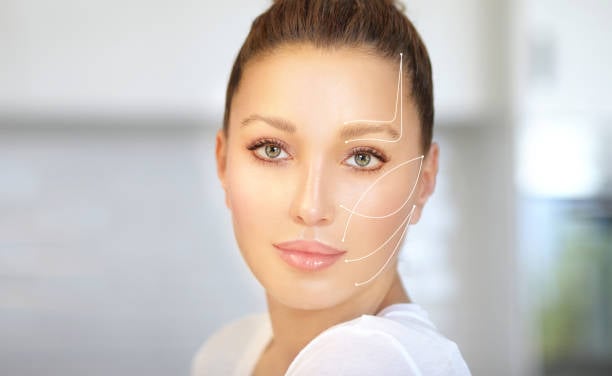
There’s a point in facial aging when skincare is still doing its job, but the mirror is showing something skincare alone can’t completely address.
Maybe your jawline isn’t quite as defined. The skin beneath your chin looks softer in photos. Your eyelids seem more crepey, or the skin around your mouth doesn’t have the same firmness it once did.
You may not be anywhere near ready for a facelift. You may never want one.
That’s where non-surgical skin tightening in Phoenix can make sense.
At Skin Theory Aesthetics, we take a fairly simple view of skin tightening: the goal isn’t to make you look pulled, different, or suddenly ten years younger. It’s to help your skin look firmer, healthier, and more like itself.
Depending on the concern, treatments such as Vybe RF Microneedling and Subnovii Plasma Pen can stimulate tissue remodeling without surgical incisions. The important part is knowing what these treatments can realistically accomplish, and when they can’t.
Featured Snippet: What Is the Best Non-Surgical Skin Tightening Treatment?
The best non-surgical skin tightening treatment depends on where and how much laxity you have. RF microneedling can address broader areas of mild skin laxity and texture, while Subnovii Plasma Pen may be considered for smaller, targeted areas. Neither replaces surgery when significant loose skin or deeper tissue descent is present.
What Does “Skin Tightening” Actually Mean?
The phrase gets thrown around so much in aesthetics that it’s easy to imagine a device physically pulling loose skin upward.
That’s not really what’s happening.
Surgical procedures can remove excess skin and reposition deeper facial tissues. Non-surgical and minimally invasive treatments work differently.
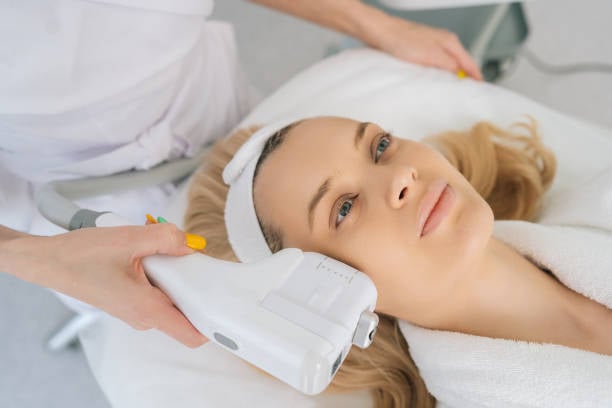
Energy-based treatments such as RF microneedling create controlled thermal effects within tissue. That controlled injury initiates repair and remodeling processes involving collagen and other components of the skin’s structural support.
Research on RF microneedling has found improvements in skin texture and tightening, but results vary by device, treatment parameters, anatomy, and patient. Importantly, the FDA also warns that serious complications have been reported with certain uses of RF microneedling, so it should be treated as a medical procedure, not a casual beauty treatment.
In practical terms, non-surgical tightening is usually about improving mild laxity and skin quality, not mechanically lifting the face into a new position.
That distinction sets much healthier expectations.
Why Phoenix Skin Can Show Signs of Aging Earlier
Living in Arizona changes the skin conversation.
UV exposure is one of the major contributors to premature skin aging. Over time, accumulated sun damage can contribute to wrinkles, pigmentation changes, and loose-looking skin.
Phoenix gives us plenty of opportunities for that exposure.
Driving to work. Walking across a parking lot. Hiking on Saturday morning. Sitting on a patio. Years of seemingly ordinary sun exposure add up.
Then there’s the dry desert environment. Low humidity doesn’t directly “destroy collagen” in the same way UV radiation can, but it can make skin feel drier and make fine crepiness more noticeable.
That’s why we think a good Phoenix anti-aging plan needs to address both structure and skin quality.
Stimulating collagen while ignoring daily UV exposure doesn’t make much sense.
What Non-Surgical Skin Tightening Can and Cannot Do
This may be the most important section of the article.
Energy-based treatments can produce meaningful improvements in the right patient. They cannot reproduce what a facelift, neck lift, or blepharoplasty physically accomplishes.
Non-Surgical Tightening May Be a Good Fit For:
- Mild to moderate skin laxity
- Early softening along the jawline
- Mild crepiness on the face or neck
- Fine lines and textural changes
- Early jowling
- Skin that has lost some firmness
- Patients comfortable with gradual rather than dramatic improvement
- People who want to avoid or postpone surgery
Non-Surgical Treatment Has Limits
If you have substantial excess skin, significant jowling, pronounced neck laxity, or upper eyelid skin interfering with vision, an energy device may not produce the result you’re picturing.
Here’s a useful test.
If you stand in front of the mirror, pull your skin upward with your fingers, and think, “That’s exactly the result I want,” tell your provider.
You may be describing a surgical result.
A trustworthy aesthetics practice shouldn’t sell you three or four device sessions when your desired outcome requires physically repositioning tissue.
Sometimes the most helpful recommendation we can make is a referral.
Who Is a Good Candidate for Non-Surgical Skin Tightening?
The sweet spot is generally someone beginning to notice laxity but who doesn’t have a large amount of excess skin.
You might notice:
- Your jawline looks softer in photos
- Early jowls are appearing
- The skin beneath your chin has become slightly loose
- Your neck looks crepey
- Fine skin around the eyes has become more noticeable
- Your cheeks don’t feel as firm
- The skin around your mouth has become finely wrinkled
- Weight loss has left mild facial or neck laxity
Age isn’t the deciding factor.
Two people who are both 45 can have completely different skin because of genetics, sun exposure, weight changes, smoking history, skincare, hormones, and other factors.
Treat the skin, not the birthday.
RF Microneedling vs. Subnovii Plasma Pen vs. Chemical Peels
These treatments can complement one another, but they don’t do the same job.
| Vybe RF Microneedling | Subnovii Plasma Pen | Chemical Peel | |
| Primary goal | Collagen remodeling, texture, mild laxity | Precise treatment of selected small areas | Tone, pigmentation and surface texture |
| Technology | Microneedles plus RF energy | Plasma-based electrosurgical energy | Chemical exfoliation |
| Treatment style | Broader treatment areas | More focal treatment | Surface resurfacing |
| Common areas considered | Face, cheeks, jawline, selected neck concerns | Selected fine lines and small areas of laxity | Face and other appropriate areas |
| Texture improvement | Yes | Can improve selected textural concerns | Yes, depending on peel |
| Standalone tightening | Can improve mild laxity | May improve selected areas | Not primarily a tightening procedure |
| Recovery | Redness, warmth and swelling can occur | Visible treatment dots, crusting and swelling can occur | Varies substantially by peel |
| Number of treatments | Often performed as a series | Depends on area and treatment plan | Depends on peel and concern |
Notice we haven’t labeled one treatment “strongest.”
Stronger isn’t the goal.
Appropriate is the goal.
Vybe RF Microneedling for Skin Tightening
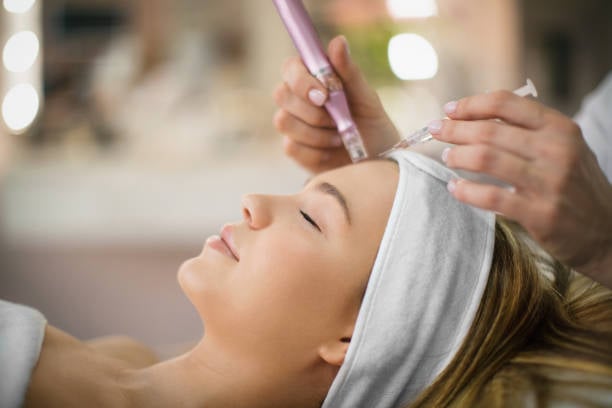
Vybe RF Microneedling combines small needles with radiofrequency energy.
The needles deliver RF energy into targeted tissue, creating controlled heating at depth. This differs from traditional microneedling, which relies primarily on mechanical micro-injury without RF energy.
For appropriately selected patients, RF microneedling may help improve:
- Mild skin laxity
- Fine lines
- Uneven texture
- Enlarged-looking pores
- Certain acne scars
- Overall skin quality
Recent systematic reviews have found evidence supporting RF microneedling for facial rejuvenation and skin laxity.
But there is an important safety discussion every patient considering RF microneedling should know about.
RF Microneedling Safety: What Changed in 2025
In October 2025, the FDA issued a safety communication regarding serious complications reported with certain uses of RF microneedling devices.
Reported complications included:
- Burns
- Scarring
- Fat loss
- Disfigurement
- Nerve damage
The FDA specifically describes RF microneedling as a medical procedure, not simply a cosmetic treatment, and recommends receiving it from a licensed healthcare provider with training and experience using RF microneedling devices.
That doesn’t mean RF microneedling is inherently unsafe.
Published research has generally reported favorable outcomes and predominantly temporary effects such as redness and swelling. But published clinical studies and real-world adverse event reporting don’t always capture exactly the same populations or treatment practices.
The takeaway shouldn’t be fear.
It should be respect for the procedure.
Device, depth, energy, facial anatomy, patient selection, and provider experience matter.
Subnovii Plasma Pen for Targeted Skin Tightening
Subnovii works very differently.
Rather than placing microneedles into the skin, Subnovii Advanced Plasma Technology is an FDA-cleared Class II electrosurgical device that uses plasma-based energy.
Treatment creates small, controlled points of injury on the skin. These areas develop characteristic crusts or dots as they heal.
Subnovii can be considered when the concern is relatively small and targeted rather than spread across the entire face.
Depending on patient anatomy and candidacy, treatment discussions may involve areas such as:
- Fine lines around the mouth
- Crepey-looking skin
- Selected areas around the eyes
- Small areas of mild laxity
- Other focal textural concerns
One clarification matters here.
Subnovii’s FDA clearance shouldn’t be described as specific FDA approval for cosmetic eyelid tightening. Its regulatory classification is for electrosurgical cutting and coagulation and accessories.
That’s different from saying the FDA specifically approved the device to lift eyelids.
What Is Subnovii Recovery Really Like?
Subnovii isn’t surgery, but don’t confuse that with “no downtime.”
Treatment leaves visible dots or crusts across the treated area.
Swelling can also occur, particularly around the eyes.
Those crusts need to fall away naturally. Picking them can interfere with healing and may increase the chance of lingering discoloration or scarring.
For someone whose job involves being on camera or meeting clients face-to-face every day, this matters.
We’d rather tell you that before treatment than call visible crusting “minimal downtime” afterward.
RF Microneedling or Subnovii: Which Is Better for Your Treatment Area?
An easy way to think about these treatments is broad versus targeted.
Jawline and Early Jowls
RF microneedling may be considered when mild laxity affects a broader area of the lower face.
But true tissue descent or heavier jowling can exceed what a non-surgical device can reasonably correct.
Cheeks
If the cheeks have mild laxity combined with texture, enlarged-looking pores, or acne scarring, RF microneedling may address multiple concerns in the same treatment plan.
Neck
RF microneedling may be considered for selected cases of mild neck laxity or crepey texture.
The neck requires careful treatment planning. Significant hanging skin, pronounced bands, or substantial tissue descent may require a different approach.
Around the Eyes
Fine, delicate skin around the eyes requires particular caution.
Subnovii may be considered for selected periocular concerns in appropriate patients, but treatment around the eyes isn’t something we’d describe casually as a substitute for eyelid surgery.
If excess upper eyelid skin is significant or affects vision, a surgical evaluation may be the appropriate next step.
Fine Lines Around the Mouth
Focal plasma treatment may be considered for selected etched lines and crepey texture around the mouth.
But lines in this area can have multiple causes, including repeated muscle movement, volume changes, sun damage, and skin quality.
Sometimes one treatment isn’t the whole answer.
Where Do Chemical Peels Fit?
Chemical peels can be valuable, but let’s give them the right job description.
They’re not primarily skin-tightening treatments.
Professional peels can improve concerns such as:
- Uneven pigmentation
- Dullness
- Rough surface texture
- Selected fine lines
- Acne-related concerns
Why might we include one in an anti-aging plan?
Because firmness isn’t the only thing people see.
Imagine improving jawline firmness while leaving significant sun damage, rough texture, and uneven pigmentation untouched. The skin may be structurally improved, but the overall result can still feel incomplete.
That’s why combination treatment often makes sense.
Not because more procedures are automatically better, but because different problems require different tools.
What About SkinPen Microneedling?
Traditional SkinPen Microneedling is another useful collagen-induction treatment available at Skin Theory.
Unlike Vybe RF, SkinPen doesn’t deliver radiofrequency energy.
It can be a good option when the primary goals involve concerns such as acne scarring, fine lines, and skin texture rather than specifically pursuing an RF-based tightening treatment.
This distinction matters because patients sometimes use “microneedling” and “RF microneedling” interchangeably.
They aren’t the same procedure.
Can Botox or Jeuveau Tighten Loose Skin?
No.
Botox and Jeuveau are neuromodulators. Their primary job is to temporarily reduce targeted muscle activity.
They don’t rebuild loose skin.
However, someone bothered by facial aging may have both laxity and dynamic wrinkles.
For example, RF microneedling might be considered for mild lower-face laxity and texture, while Botox or Jeuveau addresses expression lines elsewhere.
Again, that’s combination treatment for different problems, not throwing every treatment at the same wrinkle.
Skin Tightening After Weight Loss or GLP-1 Medications
Rapid or substantial weight loss can change the face.
As facial volume decreases, some people begin noticing:
- More prominent jowls
- Softer jawline definition
- Loose neck skin
- Hollowing
- Increased folds
- Crepey texture
This can happen after many types of weight loss, including weight loss while using GLP-1 medications.
But “GLP-1 face” isn’t a special disease caused by one medication. Similar facial changes can occur after significant weight loss from other causes.
The key question is what changed?
If the Main Problem Is Mild Laxity
Collagen-stimulating treatments may be worth discussing.
If Volume Loss Is the Bigger Problem
Tightening the skin alone may not recreate the facial support that has been lost.
If There Is Significant Excess Skin
A surgical consultation may provide a more realistic solution.
This is a good example of why we don’t automatically reach for the tightening device.
Loose-looking skin and volume loss can look similar in the mirror but require very different treatment strategies.
How Many RF Microneedling Sessions Will You Need?
There isn’t one universal number.
RF microneedling is often performed as a series because collagen remodeling develops gradually.
At Skin Theory, a plan might involve multiple treatments spaced several weeks apart, depending on:
- Degree of laxity
- Treatment area
- Skin quality
- Previous treatments
- Device settings
- Recovery
- Individual response
- Overall goals
Don’t judge your entire outcome a few days after treatment.
Early swelling can temporarily make skin look different, while actual collagen remodeling takes much longer.
How Long Does Non-Surgical Skin Tightening Take to Work?
Think months, not days.
Some early changes may become noticeable as the skin heals, but collagen remodeling is a biological process.
The more meaningful result develops gradually.
That gradual timeline is one of the reasons these treatments can look natural. You don’t walk into dinner one week looking like one person and arrive the next week with a completely different jawline.
Instead, patients often describe noticing that their skin simply looks a little firmer or better over time.
How Long Do Skin-Tightening Results Last?
There’s no honest universal expiration date.
Results depend on:
- Treatment type
- Degree of laxity
- Age
- Skin quality
- Sun exposure
- Smoking
- Weight changes
- Hormonal changes
- Skincare
- Individual collagen response
- Maintenance
New collagen doesn’t make your skin stop aging.
And in Phoenix, protecting your skin from UV exposure is one of the most important things you can do to protect the investment you’ve made in its appearance.
Phoenix Aftercare for RF Microneedling
Aftercare depends on your device settings and treatment plan, so Heather’s instructions should take priority over generic internet advice.
After RF microneedling, temporary redness, swelling, warmth, tenderness, or other skin changes can occur.
During early recovery, you may be advised to temporarily avoid:
- Retinoids
- Exfoliating acids
- Scrubs
- Excessive heat
- Strenuous exercise
- Saunas
- Hot yoga
- Swimming
- Harsh or fragranced skincare
And be serious about sun protection.
Freshly treated skin plus a long afternoon in Phoenix sun isn’t a combination we’d recommend.
Phoenix Aftercare for Subnovii Plasma Pen
Plasma treatment requires a different recovery plan.
The visible crusts are part of the healing process.
Don’t Pick the Treatment Dots
This deserves its own heading because it’s that important.
Those little crusts are not an invitation to exfoliate.
Let them detach naturally according to your aftercare instructions.
Wait for Makeup Clearance
Don’t automatically cover the dots with makeup the following morning.
Follow Heather’s instructions regarding when cosmetics can safely be resumed. The timing can depend on healing and the treatment area.
Protect Healing Skin From Arizona Sun
Sun protection matters after any procedure that creates controlled skin injury.
This is particularly relevant in Phoenix, where “I’ll just stay inside” can turn into several errands, a lunch patio, and forty minutes in the car.
If you can’t reasonably protect the treated area from significant UV exposure during recovery, timing the procedure differently may make sense.
Is Winter the Best Time for Skin Tightening in Phoenix?
Not necessarily, but it can be convenient for treatments with visible recovery or strict sun precautions.
Procedures don’t suddenly stop working because it’s July.
The issue is lifestyle.
If summer means pool weekends, outdoor travel, boating, or frequent sun exposure, a procedure that requires careful UV avoidance may be harder to manage.
Winter can simply make aftercare easier.
Choose the treatment date around your actual life, not an idealized version of it.
Can RF Microneedling and Subnovii Be Combined?
Potentially, but “can” and “should at the same time” are very different questions.
Someone with broad lower-face laxity and a small focal concern may eventually have both treatments included in an overall plan.
That doesn’t mean we need to aggressively stack energy treatments onto the same tissue at once.
A thoughtful plan allows skin to recover and lets us evaluate what the first treatment accomplished before adding the next one.
More energy isn’t synonymous with better results.
What Does a Thoughtful Combination Plan Look Like?
Instead of beginning with a list of treatments, begin with a list of problems.
For example:
- Mild lower-face laxity: Consider RF microneedling.
- Focal crepey texture: Determine whether Subnovii is appropriate.
- Uneven pigmentation: Consider skincare or a chemical peel.
- Dynamic expression lines: Consider Botox or Jeuveau.
- Dry or compromised barrier: Improve the home routine.
- Significant excess skin: Discuss surgical evaluation.
That’s a much better strategy than buying a package because it happens to contain four popular treatments.
When Should You Consider Surgery Instead?
This is an important question, and we don’t think aesthetic practices should dodge it.
Consider discussing surgery with a qualified plastic surgeon if your main concern involves:
- Significant excess facial skin
- Heavy jowls
- Pronounced neck laxity
- Structural tissue descent
- Significant upper eyelid hooding
- A desired result that requires physically repositioning tissue
A facelift, neck lift, or blepharoplasty isn’t a failure of non-surgical aesthetics.
It’s simply a different category of treatment.
If your desired result is surgical, repeatedly performing non-surgical treatments may ultimately cost more without giving you what you wanted.
Is Non-Surgical Skin Tightening Safe for All Skin Tones?
Don’t accept a blanket “yes, completely safe for everyone” without further discussion.
Patient selection, device, settings, skin tone, medical history, history of pigmentation, and sun exposure all matter.
RF microneedling has been studied across multiple skin types and is often considered useful for patients who may have greater pigment concerns with some other resurfacing procedures.
Still, no procedure that deliberately creates controlled tissue injury is completely risk-free.
Ask about:
- Post-inflammatory hyperpigmentation
- Burns
- Scarring
- Infection
- Prolonged redness
- Swelling
- Fat loss
- Nerve injury
- Expected downtime
Not every risk is equally likely, but informed consent should involve more than signing a form.
Who Should Wait or Choose Another Treatment?
Your provider may recommend delaying or avoiding a procedure depending on circumstances such as:
- Active infection in the treatment area
- Open wounds
- Certain active skin conditions
- Pregnancy
- History of abnormal scarring
- Certain implanted electronic devices for RF procedures
- Medications or medical conditions affecting healing
- Recent procedures that haven’t fully healed
- Inability to follow sun-protection instructions
Disclose implanted devices, medications, medical conditions, previous aesthetic procedures, and any history of poor wound healing.
Don’t stop a prescribed medication on your own just to qualify for treatment.
What About “Medical-Grade” Skincare?
Professional skincare can absolutely support a skin-tightening plan, but we prefer being precise about what it can and can’t do.
“Medical grade” isn’t a formal FDA category that automatically makes a product stronger or better than everything sold at retail.
What matters is the formulation, active ingredients, stability, evidence, compatibility with your skin, and whether the product addresses your actual concern.
At Skin Theory, we offer professional skincare from Skinbetter Science, VI Derm, and Epicutis, which gives us different options for concerns such as visible aging, pigmentation, hydration, barrier health, and post-treatment recovery.
Good skincare helps support your skin.
It doesn’t perform a facelift in a bottle.
How to Protect Your Results in Phoenix
If you’re spending money stimulating collagen, protecting your skin from ongoing UV damage should be part of the plan.
The American Academy of Dermatology identifies sun exposure as a major contributor to premature skin aging and recommends broad-spectrum, water-resistant SPF 30 or higher along with other sun-protective measures.
For Phoenix patients, that means:
- Daily broad-spectrum sunscreen
- Reapplication during extended outdoor exposure
- Sunglasses
- Hats
- Shade when practical
- Avoiding intentional tanning
- A skincare routine that supports your barrier
- Not smoking
- Keeping major weight fluctuations in mind
The treatment room can stimulate change.
What you do during the other 364 days helps protect it.
What Should a Skin Tightening Consultation at Skin Theory Include?
A useful consultation shouldn’t begin with, “Which package do you want?”
It should begin with:
What exactly are we trying to change?
Heather Starks, PA-C can evaluate factors such as:
- Location and degree of laxity
- Skin thickness and quality
- Texture
- Pigmentation
- Facial volume
- Muscle movement
- Previous procedures
- Medical history
- Skin tone
- History of pigmentation or scarring
- Sun exposure
- Weight changes
- Downtime tolerance
- Upcoming events
- Desired result
Bring older photographs if you have them.
Sometimes the difference between volume loss, skin laxity, and changes in facial structure is much easier to understand when you’re looking at your face from three or five years ago.
And tell Heather what result you’re actually hoping for.
The treatment has to fit your goal, not the other way around.
Choosing the Best Non-Surgical Skin Tightening in Phoenix
The “best” skin-tightening treatment isn’t automatically the newest device or the one capable of delivering the most energy.
It’s the one that matches the problem.
Vybe RF Microneedling may make sense for broader concerns involving mild laxity, texture, and collagen remodeling.
Subnovii may be considered when a smaller, more targeted area needs attention.
Chemical peels and professional skincare can address surface concerns that tightening treatments don’t.
Botox and Jeuveau can address muscle-driven wrinkles.
And when significant excess skin or deeper structural changes are present, surgery may be the more honest recommendation.
At Skin Theory Aesthetics in Phoenix, Heather Starks, PA-C takes a personalized approach to skin rejuvenation, with the goal of helping you age gracefully rather than chasing a version of your face that never moves or changes.
The goal isn’t to look tightened. It’s to look like your skin has its natural firmness back.
Frequently Asked Questions About Non-Surgical Skin Tightening
What is the best non-surgical skin tightening treatment in Phoenix?
There isn’t one treatment that’s best for everyone. RF microneedling may be useful for broader mild laxity and texture concerns, while Subnovii may be considered for smaller, targeted areas. The best option depends on your anatomy, degree of laxity, skin tone, treatment area, goals, and risk profile.
Does non-surgical skin tightening really work?
Energy-based treatments can improve mild skin laxity and skin quality in appropriately selected patients. Published research supports improvement with RF-based facial rejuvenation, but results are generally more subtle than surgery and vary by patient and device.
Is RF microneedling good for loose skin?
RF microneedling may improve mild skin laxity by creating controlled thermal effects and stimulating tissue remodeling. It isn’t a replacement for surgery when substantial excess skin or deeper tissue descent is present.
How many RF microneedling sessions do I need?
Many patients receive a series rather than one treatment, but the appropriate number depends on the device, treatment area, degree of laxity, settings, and individual response. Your plan should be based on your skin rather than a universal package.
When will I see results from RF microneedling?
Some early changes may appear as the skin recovers, while collagen remodeling develops over the following weeks and months. Judge the result after sufficient remodeling time rather than immediately after the first treatment.
How long do non-surgical skin tightening results last?
There’s no universal duration. Results depend on treatment type, age, skin quality, sun exposure, weight changes, lifestyle, and maintenance. Your skin also continues its natural aging process after treatment.
Is RF microneedling safe?
RF microneedling is a medical procedure. Published studies generally report favorable safety outcomes, but in October 2025 the FDA warned about reports of serious complications with certain uses, including burns, scarring, fat loss, nerve damage, and disfigurement. Provider training, device selection, settings, and patient selection matter.
Is Subnovii FDA approved for eyelid tightening?
It shouldn’t be described that way. Subnovii Advanced Plasma Technology received FDA 510(k) clearance as a Class II electrosurgical cutting and coagulation device and accessory. That’s different from a specific FDA approval for cosmetic eyelid tightening.
Does Subnovii replace an eyelid lift?
Not for everyone. It may be considered for selected mild skin concerns around the eyes, but significant excess eyelid skin or functional hooding may require evaluation for blepharoplasty.
How long is Subnovii downtime?
Visible treatment dots or crusts and swelling can occur during recovery. The exact healing timeline varies by treatment area and individual response. Follow your provider’s instructions and don’t pick the crusts as they heal.
When can I wear makeup after Subnovii?
Wait until your provider clears you based on how the treated area is healing. Don’t assume makeup is appropriate simply because a certain number of days have passed.
Can RF microneedling tighten the neck?
It may improve selected cases of mild neck laxity and crepey texture. Significant hanging skin, pronounced neck bands, or deeper structural changes may require another treatment approach.
Can RF microneedling help jowls?
RF microneedling may improve mild lower-face laxity, which can subtly improve the appearance of early jowling. It won’t reposition significantly descended tissue the way surgery can.
Can non-surgical skin tightening help after weight loss?
Potentially. Mild laxity may respond to collagen-stimulating treatment. However, volume loss and significant excess skin require different solutions, so post-weight-loss facial changes should be evaluated before choosing a device.
Can GLP-1 medications cause loose facial skin?
Facial laxity or hollowing can become more noticeable after substantial or rapid weight loss, including weight loss while using GLP-1 medications. Similar changes can occur after weight loss from other causes, so treatment should focus on the actual anatomy rather than the medication label.
Are chemical peels skin-tightening treatments?
Not primarily. Chemical peels are generally better suited to concerns such as pigmentation, dullness, superficial texture, and selected fine lines. They may complement a tightening plan without replacing a collagen-remodeling treatment.
Can Botox tighten loose skin?
No. Botox and Jeuveau temporarily reduce targeted muscle activity. They may complement a rejuvenation plan for dynamic wrinkles, but they don’t remove or directly tighten excess skin.
Is non-surgical skin tightening safe for darker skin tones?
Some treatments, including RF microneedling, are used across a range of skin tones, but risk isn’t zero. Settings, skin type, history of hyperpigmentation, sun exposure, and provider experience should all be considered.
Can I get RF microneedling during summer in Phoenix?
Potentially, if you can follow the required aftercare and protect healing skin from significant sun exposure. For some patients, cooler months are simply easier because outdoor activity and UV avoidance are easier to manage.
What’s better, RF microneedling or Subnovii?
Neither is universally better. RF microneedling is generally considered for broader areas and deeper collagen remodeling, while Subnovii may be considered for smaller, focal concerns. Your anatomy and treatment goal should determine the choice.
Can I combine RF microneedling and Subnovii?
They may be included in the same overall treatment plan for different concerns, but that doesn’t mean they should be performed aggressively on the same area at the same time. Appropriate sequencing and recovery matter.
At what age should I start skin tightening?
There isn’t a best age. Treatment should be based on visible laxity, skin quality, goals, and candidacy rather than a birthday. Some people notice changes earlier because of genetics, UV exposure, weight loss, or other factors.
Can skincare tighten loose skin?
Skincare can improve hydration, texture, pigmentation, and the appearance of fine lines. Certain active ingredients also support collagen-related skin functions, but topical products can’t remove significant excess skin or reproduce the structural changes of a surgical lift.
How do I know if I need skin tightening or a facelift?
If you have mild laxity and want gradual, subtle improvement, non-surgical treatment may be worth considering. If you have substantial excess skin, significant jowls or neck laxity, or want tissue physically repositioned, a surgical consultation may be more appropriate.