Featured Snippet Microneedling in Phoenix can be safe for many people with sensitive skin when the skin barrier is healthy, treatment settings are customized, and proper aftercare is followed. Active rosacea flares, eczema, infections, open acne lesions, sunburn, or a compromised skin barrier may require postponing treatment. A professional consultation should always come first. Having …
Featured Snippet
Microneedling in Phoenix can be safe for many people with sensitive skin when the skin barrier is healthy, treatment settings are customized, and proper aftercare is followed. Active rosacea flares, eczema, infections, open acne lesions, sunburn, or a compromised skin barrier may require postponing treatment. A professional consultation should always come first.
Having sensitive skin can make almost any new treatment feel like a gamble.
A product that your friend swears by leaves your face burning. A few hours outside in the Phoenix heat can trigger redness. Retinol works beautifully until suddenly it doesn’t. Even seemingly gentle treatments may cause more irritation than expected.
So when someone suggests intentionally creating thousands of microscopic channels in your skin, asking, “Is microneedling safe for sensitive skin?” is completely reasonable.
The answer is often yes, but with an important qualification.
Sensitive skin should not be treated with a standard protocol simply because microneedling is considered minimally invasive. Skin condition, barrier health, pigmentation history, underlying conditions such as rosacea, device choice, needle depth, radiofrequency settings, and aftercare all matter.
At Skin Theory Aesthetics in Phoenix, Heather Starks, PA-C evaluates those factors before recommending SkinPen Microneedling, Vybe RF Microneedling, or another treatment entirely.
Sometimes the right treatment is microneedling.
Sometimes the right answer is, “Not yet.”
What Does “Sensitive Skin” Actually Mean?
“Sensitive skin” is not one specific diagnosis.
Patients use the term to describe several very different situations, and knowing which one applies to you can change the treatment plan considerably.
Barrier-Compromised Skin
This is skin that frequently feels:
- Tight
- Dry
- Stingy
- Easily irritated
- Reactive to skincare products
- Sensitive to wind, heat, or cold
Over-exfoliation, aggressive retinoid use, dry Arizona air, and too many active ingredients can all weaken the skin barrier.
A compromised barrier usually needs to be repaired before microneedling.
Rosacea-Prone Skin
Rosacea can cause:
- Persistent facial redness
- Flushing
- Burning
- Visible blood vessels
- Papules or pustules
- Heat sensitivity
Some people with well-controlled rosacea may eventually be candidates for conservative microneedling. Active rosacea is a different story.
If the face is already burning, flushing, or inflamed, creating additional controlled injury may aggravate the problem rather than improve it.
Eczema, Dermatitis, or Psoriasis
Active inflammatory skin conditions generally should not be needled.
Treatment may become an option when the skin is completely calm, but candidacy should be evaluated individually.
Acne-Prone Skin
Having acne does not automatically rule out microneedling.
Having active, inflamed, infected, or open acne lesions can.
Microneedling is often more useful after active acne is controlled, when the treatment goal shifts toward:
- Depressed acne scars
- Enlarged-looking pores
- Uneven texture
- Post-acne skin changes
Pigmentation-Prone Skin
Some patients develop dark marks easily after inflammation.
This is called post-inflammatory hyperpigmentation, or PIH.
Microneedling may still be appropriate, but depth, treatment intensity, sun exposure, skincare, and post-treatment protection become especially important.
How Microneedling Works
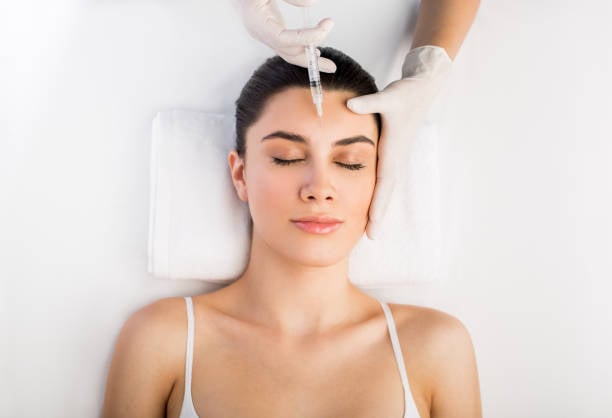
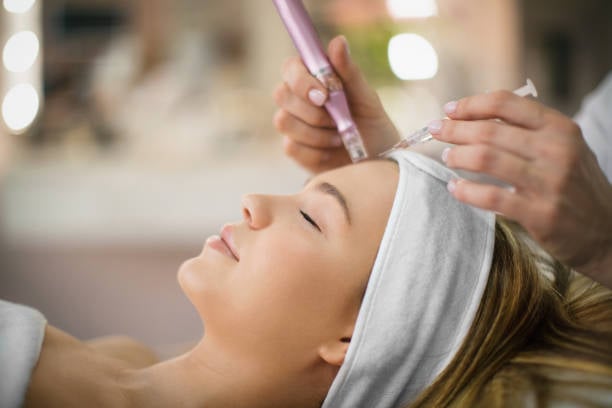
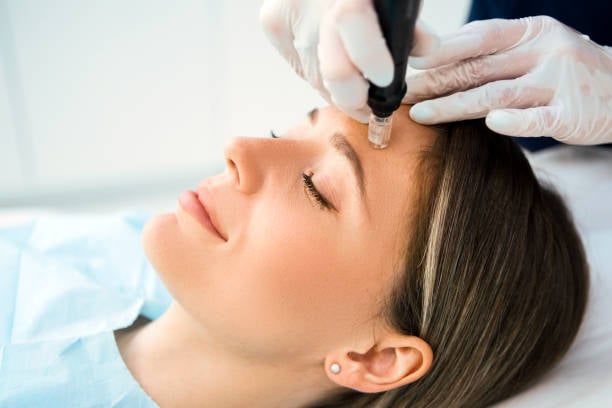
Microneedling uses very fine, sterile needles to create controlled microchannels in the skin.
Those tiny injuries stimulate the skin’s natural wound-healing process and encourage collagen remodeling.
The purpose is not to scrape away the surface or aggressively remove layers of skin.
Instead, the treatment creates a controlled signal that tells the body repair is needed.
Over the following weeks and months, this process may improve:
- Acne scars
- Fine lines
- Enlarged-looking pores
- Uneven texture
- Overall skin quality
- Mild age-related changes
That gradual remodeling is part of why microneedling appeals to patients who want natural-looking improvement rather than an immediate cosmetic transformation.
Why Sensitive Skin Requires a Different Microneedling Approach
The same treatment that works beautifully on resilient, oily skin can be too aggressive for someone whose face becomes irritated from changing moisturizers.
Sensitive skin often benefits from:
- More conservative needle depths
- Fewer aggressive passes
- Careful product selection
- Longer recovery between sessions
- A simplified skincare routine
- Deliberate sun and heat avoidance
- Close monitoring of the first treatment response
The first appointment should not be treated as an opportunity to see how deep the device can go.
For a reactive patient, a more conservative first session provides useful information about how the skin heals.
You can always adjust later.
It is much harder to undo an overly aggressive treatment.
SkinPen vs. RF Microneedling for Sensitive Skin
Skin Theory Aesthetics offers both SkinPen Microneedling and Vybe RF Microneedling.
The two treatments share some similarities, but the distinction becomes especially important for reactive skin.
SkinPen Microneedling
SkinPen uses mechanical microneedling without radiofrequency heat.
Fine needles create controlled microchannels at customized depths to stimulate collagen remodeling.
SkinPen may be considered for concerns such as:
- Acne scars
- Enlarged pores
- Fine lines
- Uneven texture
- General collagen support
For someone with a history of flushing or heat sensitivity, the absence of added thermal energy can make traditional microneedling worth discussing first.
That does not mean SkinPen is automatically safe for every sensitive complexion. It still creates controlled injury and should only be performed when the skin is healthy enough to tolerate it.
Vybe RF Microneedling
Vybe RF Microneedling combines mechanical needling with radiofrequency energy delivered beneath the skin.
The additional heat can support deeper remodeling and may be useful for:
- Acne scars
- Texture irregularities
- Fine lines
- Enlarged pores
- Mild skin laxity
- Loss of firmness
For sensitive or rosacea-prone patients, however, heat deserves extra consideration.
Heat itself can be a trigger for flushing and inflammation.
That does not automatically exclude RF microneedling, but it makes proper patient selection and conservative settings especially important.
SkinPen vs. RF Microneedling at a Glance
| Feature | SkinPen Microneedling | Vybe RF Microneedling |
| Main action | Mechanical micro-injuries | Mechanical needling plus RF heat |
| Added thermal energy | No | Yes |
| Common concerns | Scars, pores, fine lines, texture | Scars, texture, firmness, mild laxity |
| Sensitive skin consideration | May be a more conservative starting point | Requires greater caution if heat triggers redness |
| Treatment depth | Customized | Depth and RF energy customized |
| Recovery | Usually redness and sensitivity for several days | Redness, warmth, and swelling may be more noticeable |
Neither option is universally better.
The better question is: Which treatment matches your skin today?
A Current Safety Consideration With RF Microneedling
RF microneedling should be treated as a medical aesthetic procedure, not a casual spa add-on.
In 2025, the FDA issued a safety communication concerning reported complications associated with certain uses of RF microneedling devices, including burns, scarring, fat loss, nerve injury, and other serious adverse events.
That does not mean every RF microneedling treatment is unsafe.
It reinforces something experienced providers already know: device selection, treatment depth, RF energy, facial anatomy, skin thickness, and provider training matter.
Patients with reactive or thin skin have even more reason to choose a medically guided practice rather than shopping primarily by price.
Is Microneedling Safe If You Have Rosacea?
This deserves more than a simple yes or no.
During an Active Rosacea Flare
Microneedling should generally be postponed.
If your face is currently:
- Burning
- Flushing significantly
- Inflamed
- Covered in active papules or pustules
- Unusually sensitive
the priority should be calming the skin.
Adding controlled micro-injury to already inflamed tissue may increase irritation.
When Rosacea Is Well Controlled
Some patients with stable rosacea may tolerate conservative microneedling.
The decision depends on:
- Current inflammation
- Rosacea subtype
- Skin barrier health
- Heat sensitivity
- Previous procedure response
- Current medications
- Treatment depth
- Device selection
Traditional mechanical microneedling may sometimes be preferred over RF when heat is a significant rosacea trigger.
If redness is your primary concern, another treatment may also be more appropriate.
Microneedling is not automatically the best treatment simply because you have redness.
Who Should Wait Before Getting Microneedling?
Sensitive skin itself is not necessarily a contraindication.
Active inflammation often is.
Treatment may need to be postponed if you have:
- Active eczema or dermatitis
- Active psoriasis in the treatment area
- Open or infected acne lesions
- An active bacterial skin infection
- A current cold sore or herpes outbreak
- Sunburn
- Open wounds
- A severely compromised skin barrier
- Significant current facial irritation
- A history of abnormal or keloid scarring requiring further evaluation
- Certain bleeding or healing disorders
- Certain immune conditions
- Medications that may affect healing or bleeding
- Recent procedures that have not fully healed
Pregnancy, breastfeeding, implanted medical devices, medication use, and other medical considerations should also be discussed during consultation, particularly when RF energy or topical anesthetics are involved.
What About Accutane or Isotretinoin?
This requires individualized medical guidance.
The old blanket advice to avoid every skin procedure for six months after isotretinoin has become more nuanced, and appropriate timing can depend on the procedure, dose, skin condition, and healing history. Schedule now.
Do not make the decision based on an internet timeline.
Tell your provider exactly when you used isotretinoin and allow them to determine whether treatment should proceed.
How to Prepare Sensitive Skin for Microneedling
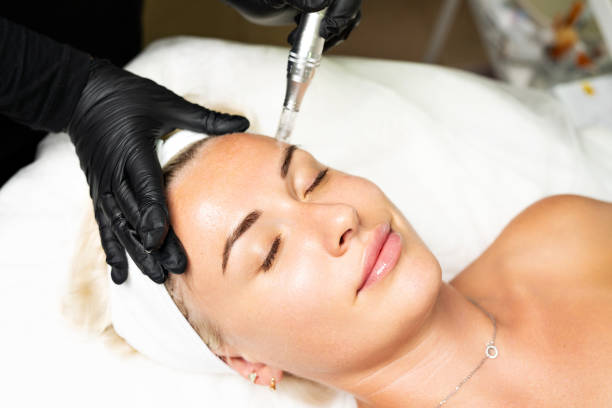
The healthiest starting point is calm, hydrated skin with an intact barrier.
Preparation should be personalized, but your provider may recommend temporarily simplifying your routine.
Pause Irritating Actives
Depending on your skin, this may include temporarily stopping:
- Retinoids
- Retinol
- Glycolic acid
- Salicylic acid
- Other exfoliating acids
- Scrubs
- Strong vitamin C formulas
- Benzoyl peroxide
Five days is a common general timeframe for certain actives, but sensitive patients may need longer.
Follow your provider’s instructions rather than assuming every product should be stopped for exactly the same period.
Support Your Skin Barrier
Your routine before treatment may emphasize:
- Gentle cleansing
- Ceramides
- Hyaluronic acid
- Fragrance-free moisturizers
- Barrier-supporting ingredients
- Daily sunscreen
This is not the week to introduce three new products.
Avoid Sunburn
This matters everywhere.
It matters even more in Phoenix.
Do not arrive for microneedling with freshly sunburned or heavily irritated skin.
Even incidental Arizona exposure can add up, especially after:
- Hiking
- Pool days
- Outdoor sports
- Patio events
- Long drives
- Weekends at the lake
If your skin is irritated from the sun, tell your provider.
Tell Your Provider About Medications
Do not independently stop prescription medications or medically necessary blood thinners for a cosmetic procedure.
Instead, provide a complete medication and supplement history.
Any changes should be made only with appropriate medical guidance.
What Happens During a Sensitive-Skin Microneedling Appointment?
Step 1: Skin and Medical Evaluation
Heather Starks, PA-C will assess factors such as:
- Skin type
- Current inflammation
- Barrier health
- Medical history
- Medications
- Acne activity
- Rosacea history
- Pigmentation tendency
- Previous treatments
- Sun exposure
- Treatment goals
The most important question is not simply whether you “have sensitive skin.”
It is whether your skin is stable enough today.
Step 2: Cleansing and Numbing
The treatment area is cleaned thoroughly.
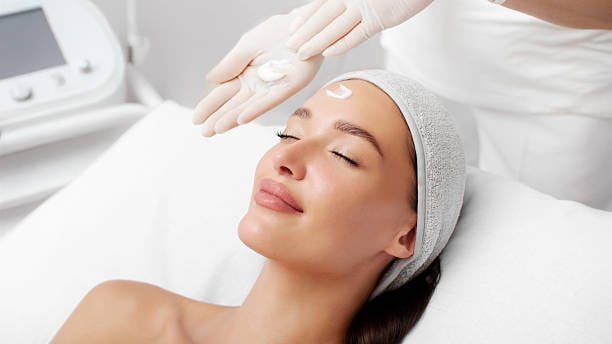
A topical anesthetic is commonly applied before professional microneedling to make the procedure more comfortable.
If you have experienced reactions to lidocaine, topical anesthetics, adhesives, or skincare ingredients, tell your provider beforehand.
Step 3: Customized Treatment
Needle depth and treatment intensity are adjusted according to the area and concern.
Thin or reactive areas may be approached differently from:
- Thicker cheek tissue
- Acne scars
- Jawline areas
- Neck skin
- More resilient parts of the face
Sensitive skin should not automatically receive the exact same protocol as everyone else.
What Does Microneedling Feel Like?
With topical numbing, most patients tolerate the procedure well.
Common sensations include:
- Vibration
- Pressure
- Prickling
- Mild scratching sensations
- Warmth with RF microneedling
Certain areas, such as the forehead or around bony contours, may feel more noticeable.
If your skin begins feeling unusually painful, hot, or uncomfortable, say something.
Communication is part of safe treatment.
What Does Recovery Look Like for Sensitive Skin?
Reactive skin may stay pink or irritated slightly longer than average.
That does not automatically mean something went wrong.
First 6 to 24 Hours
Your skin may look and feel similar to a sunburn.
Expect some combination of:
- Redness
- Warmth
- Tightness
- Mild swelling
- Tenderness
Use only the post-treatment products recommended by your provider.
Skip:
- Makeup
- Retinoids
- Exfoliating acids
- Scrubs
- Hot showers
- Heavy sweating
- Saunas
- Hot yoga
Days 2 to 3
Redness usually begins settling.
Sensitive skin may still feel:
- Dry
- Tight
- Slightly rough
- Pink
- Easily irritated
Continue gentle cleansing and barrier support.
This is not the time to rush back into your full active skincare routine.
Days 4 to 7
Many patients look largely back to normal.
Mild dryness or light flaking may remain.
Makeup is often tolerated by this point, although some patients may resume sooner if the skin is calm and the provider approves it.
Days 7 to 10
Many sensitive-skin patients can gradually restart normal active ingredients once there is:
- No stinging
- No peeling
- No unusual redness
- No persistent tenderness
If your face still feels irritated, waiting longer is often smarter than forcing the schedule.
Phoenix-Specific Microneedling Aftercare
Generic aftercare advice does not always account for living in a desert.
Phoenix gives healing skin three challenges at once: UV exposure, low humidity, and heat.
Take Sun Protection Seriously
Healing skin is particularly vulnerable to UV exposure and pigmentation changes.
Once your provider clears sunscreen use, apply a broad-spectrum SPF appropriate for your skin.
Also use:
- Hats
- Sunglasses
- Shade
- Covered parking when available
- Reduced midday outdoor exposure
For the first few days, changing your schedule is often easier than trying to overpower Phoenix sunshine with sunscreen alone.
Avoid Heat and Heavy Sweating
Temporarily avoid:
- Outdoor workouts
- Hot yoga
- Saunas
- Steam rooms
- Hot tubs
- Very hot showers
- Extended time outside during peak heat
Heat may amplify redness and irritation, especially in rosacea-prone patients.
Skip the Pool
Swimming pools introduce chlorine, sun exposure, heat, and potential irritation at exactly the time your skin needs simplicity.
Wait until your provider says swimming is appropriate.
Help Your Barrier Hold Moisture
Phoenix’s low humidity can make freshly treated skin feel exceptionally dry.
Focus on provider-approved hydration and barrier support.
A humidifier may also make indoor air more comfortable if air conditioning leaves your home particularly dry.
Don’t Pick or Exfoliate Flaking Skin
If your skin begins flaking, leave it alone.
Picking and scrubbing can increase:
- Inflammation
- Pigmentation
- Irritation
- Healing time
Your skin does not need help peeling faster.
When Should You Call the Provider?
Temporary redness and sensitivity are expected.
Contact your provider if you develop symptoms such as:
- Increasing rather than improving pain
- Spreading redness
- Significant warmth that worsens
- Yellow crusting
- Pus
- Fever
- Blisters
- Significant swelling
- A suspected allergic reaction
- A cold sore outbreak
- Symptoms that feel clearly different from the recovery your provider described
The goal is not to make patients nervous.
It is to distinguish normal healing from something that deserves attention.
At-Home Dermarolling vs. Professional Microneedling
If your skin is already reactive, DIY microneedling deserves extra caution.
At-home rollers and inexpensive microneedling pens create several challenges:
- Sterilization can be difficult
- Depth may be inconsistent
- Needles may become dull
- Users often make too many passes
- Active acne may be treated accidentally
- Products not intended for needled skin may be applied afterward
- Skin may be treated too frequently
Sensitive skin does not need more variables.
Professional treatment allows the provider to control:
- Needle depth
- Number of passes
- Treatment area
- Sterility
- Device settings
- Appropriate aftercare
- Whether treatment should happen at all
Sometimes the most valuable thing a provider does is look at your skin and say, “Not today.”
How Many Microneedling Sessions Does Sensitive Skin Need?
Microneedling results are cumulative.
Many treatment plans involve approximately three sessions spaced four to six weeks apart. This schedule can be customized as part of a personalized skin treatment in Phoenix AZ plan based on your skin’s condition and treatment goals.
Sensitive patients may occasionally benefit from longer intervals, such as six to eight weeks, if the skin needs additional time to completely normalize.
Treatment frequency depends on:
- Acne scar severity
- Texture
- Pore appearance
- Skin sensitivity
- Healing response
- Treatment intensity
- Device used
- Desired improvement
More frequent treatment does not automatically produce faster collagen.
Allowing the skin to heal is part of the treatment.
When Will You See Results?
There are two different timelines.
Early Skin Changes
Within the first couple of weeks, patients may notice:
- Smoother-feeling skin
- Improved radiance
- More refined texture
Collagen Remodeling
Changes involving scars, fine lines, and deeper texture develop more gradually.
Collagen remodeling can continue for several months after treatment.
That gradual improvement is why progress photos are useful.
When you look at your face every morning, slow changes are surprisingly easy to miss.
Can Microneedling Make Sensitive Skin Stronger?
Microneedling may support collagen remodeling and improve certain structural concerns, but it should not be described as a cure for sensitive skin.
Sensitivity can come from many causes, including:
- Rosacea
- Eczema
- Barrier disruption
- Allergies
- Skincare irritation
- Genetics
- Environmental exposure
If the problem is an impaired skin barrier, fixing the barrier should come first.
Microneedling should be chosen to treat an appropriate concern, not simply because someone wants their skin to become “less sensitive.”
Questions to Ask Before Booking Microneedling in Phoenix
If you have reactive skin, asking good questions matters.
Consider asking:
- Which microneedling device would you recommend for my skin, and why?
- Would you choose traditional microneedling or RF for me?
- Is my skin currently calm enough for treatment?
- How will you adjust the depth because of my sensitivity?
- What should I stop using before my appointment?
- What exact products can I use afterward?
- How long should I avoid Arizona sun and heat?
- What should I do if my rosacea flares?
- How do you manage a history of cold sores?
- What symptoms should prompt me to call the office?
- How long should I wait before restarting retinol?
- How much downtime should I realistically plan for?
A qualified provider should be comfortable answering all of them.
Is Microneedling Worth It for Sensitive Skin?
For the right patient, yes.
Sensitive skin does not mean you have to avoid professional aesthetic treatments forever.
It does mean the treatment needs to respect your skin rather than challenge it unnecessarily.
Microneedling may be worth considering if:
- Your skin barrier is healthy
- Your underlying condition is controlled
- You want to improve scars, pores, fine lines, or texture
- You understand that some temporary redness is expected
- You’re willing to follow aftercare
- You can avoid Phoenix sun and excessive heat during recovery
- Your provider believes the treatment fits your skin
It may not be the right choice if your skin is actively inflamed, infected, sunburned, or struggling to tolerate basic skincare.
Sensitive Skin Needs a Thoughtful Plan, Not a Stronger Treatment
There is a tendency in aesthetics to assume that stronger treatments produce better results.
Sensitive skin often proves the opposite.
The best result may come from conservative depth, thoughtful timing, excellent barrier care, and enough patience to let the skin heal properly.
At Skin Theory Aesthetics in Phoenix, Heather Starks, PA-C evaluates your skin before recommending SkinPen Microneedling, Vybe RF Microneedling, or another approach. The goal is not simply to perform a treatment. It is to choose a treatment your skin can tolerate and that actually addresses your concern.
If you’re considering microneedling for sensitive skin in Phoenix, AZ, schedule a personalized consultation to discuss your skin history, current sensitivity, treatment goals, and whether mechanical or RF microneedling makes sense for you.
Frequently Asked Questions
Is microneedling safe for sensitive skin?
Microneedling can be safe for some people with sensitive skin when the skin barrier is healthy, treatment settings are conservative, and aftercare is followed carefully. Active inflammation, sunburn, infection, eczema, rosacea flares, or a damaged barrier may require postponing treatment.
Is microneedling okay if I have rosacea?
Possibly, but only when rosacea is well controlled. Active flushing, burning, papules, pustules, or significant inflammation are reasons to postpone treatment. Some rosacea-prone patients may tolerate conservative mechanical microneedling better than RF because heat can trigger flushing.
Can microneedling make rosacea worse?
It can temporarily increase redness and may aggravate active rosacea if treatment is performed during a flare or too aggressively. Rosacea patients should be evaluated individually before microneedling.
Is SkinPen good for sensitive skin?
SkinPen may be appropriate for selected sensitive-skin patients because it uses mechanical microneedling without added RF heat. Candidacy still depends on barrier health, inflammation, skin condition, and treatment settings.
Is RF microneedling safe for sensitive skin?
It can be appropriate for certain patients, but RF adds heat to the treatment and therefore requires additional caution in people with reactive, thin, or rosacea-prone skin. Conservative energy settings and experienced medical supervision are particularly important.
Is SkinPen safer than RF microneedling for rosacea?
Not universally, but mechanical microneedling avoids the added radiofrequency heat that can trigger flushing in some rosacea patients. A provider may therefore consider SkinPen before RF for certain heat-sensitive patients.
How many days should I stop retinol before microneedling?
Many providers recommend pausing retinoids for approximately five days before treatment, although sensitive skin may require a longer break. Follow your provider’s instructions based on the strength of your product and your skin’s tolerance.
Should I stop vitamin C before microneedling?
Strong or acidic vitamin C formulas may be temporarily paused if they irritate your skin. Sensitive patients should follow a simplified pre-treatment routine recommended by their provider.
Can I use numbing cream before microneedling?
Professional microneedling commonly involves topical anesthetic to improve comfort. Tell your provider about previous reactions to lidocaine, topical anesthetics, adhesives, or other skincare ingredients before numbing cream is applied.
How long will sensitive skin stay red after microneedling?
Many patients experience redness for one to three days, but reactive skin may remain pink somewhat longer. Treatment intensity, device type, skin condition, and individual healing all affect recovery.
Can I wear makeup after microneedling?
Patients are commonly advised to avoid makeup for at least the first 24 hours or until the skin has sufficiently calmed. Sensitive skin may need longer. When makeup is resumed, clean brushes and gentle products are important.
Can I exercise after microneedling?
Heavy exercise and sweating are usually avoided during early recovery because heat, sweat, and friction can aggravate treated skin. This is especially important during hot Phoenix weather.
Can I go outside after microneedling in Phoenix?
Brief necessary outings may be manageable with appropriate protection, but unnecessary direct sun exposure should be minimized during early healing. Follow your provider’s instructions regarding sunscreen, hats, shade, and outdoor activity.
Can I swim after microneedling?
Swimming is usually avoided during early healing. Chlorinated pools, hot tubs, lakes, sun exposure, and potential contaminants can irritate recently treated skin.
Is microneedling safe for darker skin tones?
Professional microneedling may be appropriate for many darker skin tones, but post-inflammatory hyperpigmentation remains possible. Treatment depth, inflammation, sun exposure, pigmentation history, and aftercare should all be considered.
Can microneedling treat post-acne redness?
Microneedling is primarily used for texture and collagen remodeling rather than as a first-line treatment specifically for redness. If post-inflammatory redness is the primary concern, another treatment may be more appropriate.
Can microneedling treat acne scars if I still have breakouts?
Active inflamed acne is generally controlled first. Once breakouts are stable, microneedling may be considered for depressed acne scars and uneven texture.
How many microneedling sessions will I need?
Many patients begin with approximately three sessions spaced four to six weeks apart. Sensitive patients may need longer intervals if their skin requires additional recovery time.
How long before an important event should I schedule microneedling?
If your skin is sensitive, allowing at least one to two weeks before an important event is prudent. This gives redness, dryness, or unexpected irritation time to settle.
Can I microneedle at home if my skin is sensitive?
Professional treatment is generally the safer choice for reactive skin. At-home rollers and pens can create inconsistent depth, hygiene issues, over-treatment, irritation, and pigmentation problems.
When should I call my provider after microneedling?
Contact your provider if redness spreads or worsens, pain increases after the first couple of days, or you develop blisters, pus, yellow crusting, fever, unusual swelling, or another reaction that does not match the recovery you were told to expect.
Who should not get microneedling?
Treatment may need to be postponed for active infections, open wounds, inflammatory acne, eczema or psoriasis flares, significant skin irritation, sunburn, or certain medical conditions. Medical history and medications should be reviewed before treatment.
Is microneedling safe after Accutane?
Recent isotretinoin use requires individualized medical assessment. The appropriate timing depends on factors including dose, skin condition, healing history, and the specific treatment being considered, so tell your provider about any current or recent isotretinoin use.
Does sensitive skin take longer to heal after microneedling?
It can. Reactive skin may remain pink, dry, or sensitive slightly longer than more resilient skin. Giving the barrier adequate recovery time is more important than rushing back to active skincare.
Can microneedling permanently cure sensitive skin?
No. Microneedling may improve collagen, scars, texture, and certain signs of aging, but sensitive skin can have many underlying causes. Barrier dysfunction, rosacea, eczema, allergies, or product irritation require their own management.