If you've searched for “affordable chemical peels in Phoenix, you've probably found everything from inexpensive spa facials to stronger professional peels with very different price tags. The cheapest option isn't necessarily the best value, especially when acids, pigmentation, and Arizona sun are involved. A well-chosen chemical peel can improve dullness, uneven tone, post-acne discoloration, rough …
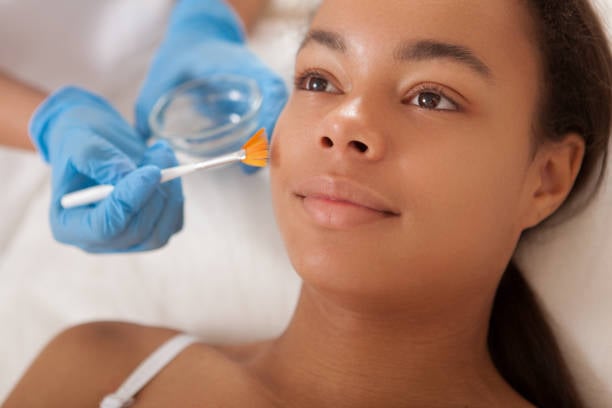
If you’ve searched for “affordable chemical peels in Phoenix, you’ve probably found everything from inexpensive spa facials to stronger professional peels with very different price tags.
The cheapest option isn’t necessarily the best value, especially when acids, pigmentation, and Arizona sun are involved.
A well-chosen chemical peel can improve dullness, uneven tone, post-acne discoloration, rough texture, and certain signs of sun damage that daily skincare may not fully address. The key is choosing the appropriate peel depth and formula for your skin, then following the right recovery plan.
At Skin Theory Aesthetics in Phoenix, Heather Starks, PA-C approaches chemical peels as part of a personalized skin plan, not a one-formula-fits-everyone treatment.
Featured Snippet: How Much Does a Chemical Peel Cost in Phoenix?
Chemical peel prices in Phoenix vary by peel type, depth, treatment area, and provider. Light peels may cost around $100 to $200, while more advanced branded treatments such as VI Peel commonly cost a few hundred dollars per session. For pigmentation or texture concerns, a series may provide better results than a single peel.
What Does “Affordable” Chemical Peel Really Mean?
There’s nothing wrong with caring about price. You should.
But when you’re applying a chemical solution designed to create a controlled injury to your skin, affordable shouldn’t simply mean cheapest.
A good-value professional peel includes more than the solution itself. You’re also paying for:
- Skin and medical history evaluation
- Appropriate peel selection
- Correct treatment strength and application
- Screening for contraindications
- Professional-grade products
- Clear pre-treatment and aftercare instructions
- Follow-up if your skin doesn’t respond as expected
Current published Phoenix pricing demonstrates just how wide the market can be. Some lighter chemical peels are advertised for under $100, while branded VI Peel treatments at local practices can run approximately $200 to $300 or more depending on the formula and treatment area.
So comparing a $95 superficial peel with a $300 VI Peel isn’t necessarily an apples-to-apples comparison.
The better question is: Which treatment gives your skin the improvement you’re actually paying for?
How Do Professional Chemical Peels Work?
Chemical peels use carefully selected chemical agents to create controlled exfoliation at a predetermined depth.
Depending on the formulation, treatment may help improve concerns such as:
- Dull skin
- Uneven texture
- Acne
- Post-acne discoloration
- Hyperpigmentation
- Sun damage
- Fine lines
- Certain superficial scars
Chemical peels are generally categorized by how deeply they affect the skin: superficial, medium, or deep. Treatment depth influences both the potential result and the amount of recovery involved.
This is also why a professional chemical peel isn’t simply a stronger version of the exfoliating acid sitting in your bathroom.
The formula, concentration, treatment depth, skin type, medical history, and application all matter.
Light vs. Medium vs. Deep Chemical Peels
Understanding peel depth makes comparing prices much easier.
| Peel Depth | General Target | Often Considered For | Typical Recovery |
| Superficial or light | Primarily epidermis | Dullness, mild discoloration, acne, light texture concerns | Minimal peeling or several days of flaking |
| Medium | Epidermis into upper dermis | More established pigmentation, photoaging, fine lines, selected scars | More visible peeling and recovery |
| Deep | Deeper dermal injury | Advanced photoaging and deeper wrinkles in carefully selected patients | Significant recovery, greater risk |
Deeper does not automatically mean better.
The depth should match the concern, complexion, medical history, and amount of downtime you’re comfortable accepting. Risks and recovery generally increase with peel depth.
For many patients simply searching for an affordable chemical peel in Phoenix, a superficial or appropriately selected medium-depth treatment is much more relevant than an aggressive deep peel.
Professional Chemical Peels vs. At-Home Exfoliation
We love good home skincare at Skin Theory.
But home care and professional procedures have different jobs.
An appropriately formulated cleanser, retinoid, antioxidant, exfoliant, moisturizer, and sunscreen can make a tremendous difference in skin quality over time. Professional peels can provide a more controlled resurfacing treatment when home care alone isn’t producing the desired improvement.
That doesn’t make your skincare useless.
Actually, it’s the opposite.
A professional peel can help correct an existing concern, while a smart home routine helps maintain the improvement and protect your skin between treatments.
The strongest long-term plan usually isn’t peels versus skincare.
It’s peels plus skincare.
Why Chemical Peels Need to Be Personalized
Two people can walk into Skin Theory complaining about “dark spots” and need completely different plans.
One may have sun-induced pigmentation.
Another may have post-inflammatory hyperpigmentation left behind after acne.
A third may be dealing with melasma, which is influenced by a more complicated combination of factors and has a tendency to recur.
That’s why Heather evaluates factors such as:
- Skin tone and Fitzpatrick phototype
- Current skin condition
- Pigmentation history
- Acne
- Sensitivity
- Previous treatments
- Medications
- Sun exposure
- Home skincare
- History of abnormal scarring
- Upcoming travel and events
That last one is more important than it sounds.
A chemical peel might be technically appropriate for your skin but completely inappropriate for the week before your Scottsdale resort weekend.
The VI Peel: A Step Up From a Basic Facial Peel
Skin Theory offers VI Peel in Phoenix for patients who need more targeted resurfacing than they may get from a basic facial or mild exfoliating treatment.
VI Peel formulas use combinations of ingredients that can include trichloroacetic acid (TCA), salicylic acid, retinoic acid, phenol, and vitamin C, depending on the formulation.
Vitamin C is included as an antioxidant. It is not an alpha-hydroxy acid, an important distinction from the original version of this article.
Different VI Peel formulations are designed around different skin concerns rather than treating every patient with exactly the same solution.
Which VI Peel Is Right for You?
VI Peel offers several formulations, and this is where professional selection becomes valuable.
VI Peel Original
This may be considered for general rejuvenation and concerns involving tone, texture, and signs of aging.
VI Peel Advanced
Advanced is designed for patients with more established signs of aging who want to address concerns such as fine lines and loss of skin quality.
VI Peel Precision Plus
Precision Plus is focused on pigmentation concerns such as sun damage and uneven tone.
For Phoenix patients who have accumulated years of Arizona sun exposure, pigmentation is obviously a common conversation.
VI Peel Purify
Purify is designed with acne-prone and congested skin in mind.
VI Peel Purify With Precision Plus
This option addresses the combination many acne patients actually struggle with: active breakouts plus the discoloration those breakouts leave behind.
The right formula should come from evaluating the skin rather than choosing whichever name sounds strongest.
What Can a Chemical Peel Improve?
Professional chemical peels can be useful for several concerns, but results depend on the type and depth of peel.
Dull, Rough Skin
When dead surface cells accumulate, skin can look flat and feel rough.
Controlled exfoliation can reveal a smoother, brighter-looking surface and improve overall texture.
Sun Damage and Uneven Pigmentation
This is especially relevant in Arizona.
Chemical peels can be used as part of a treatment plan for certain forms of hyperpigmentation and photodamage. Chemical peels for dull skin may also help improve overall skin tone and texture by removing damaged outer skin cells. They aren’t, however, permission to return immediately to unprotected sun exposure.
Post-Acne Dark Marks
Chemical peels can help with post-inflammatory discoloration and may also be used as part of an acne treatment plan. Research supports superficial to medium-depth peels as an adjunctive option for appropriately selected acne patients. (PubMed Central (PMC))
Fine Lines and Texture
Peels can improve superficial texture and certain fine lines.
But if the line is being created primarily by repeated muscle movement, Botox or Jeuveau may make more sense.
If the concern is deeper collagen loss or skin laxity, microneedling or RF microneedling may be a better tool.
Melasma
Chemical peels can be incorporated into some melasma treatment plans, but they shouldn’t be sold as a permanent cure.
Melasma tends to recur and can be influenced by UV exposure, visible light, heat, hormones, and other factors.
For a patient living in Phoenix, controlling those triggers is just as important as the peel itself.
What Chemical Peels Cannot Do
This is where realistic expectations save money.
A chemical peel won’t:
- Remove significant loose skin
- Replace Botox for movement-related wrinkles
- Replace filler for true volume loss
- Erase deep pitted acne scars
- Permanently cure melasma
- Replace daily sunscreen
- Fix every form of pigmentation
- Undo years of sun damage in one appointment
If you have deep ice-pick acne scars, for example, purchasing peel after peel because it’s less expensive than another treatment can ultimately cost you more.
The right treatment is usually more affordable than repeatedly paying for the wrong one. Schedule a treatment.
What Happens During a Chemical Peel at Skin Theory?
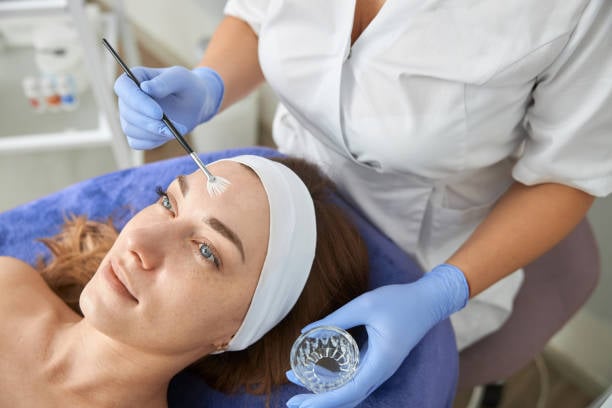
Your appointment starts with an evaluation rather than an acid bottle.
Step 1: Skin Assessment
Heather evaluates your concerns, skin type, medications, current products, previous procedures, pigmentation tendencies, and other relevant factors.
Step 2: Peel Selection
The treatment is selected according to your skin and goals.
The strongest peel isn’t automatically chosen.
Step 3: Application
Your skin is prepared and the chemical solution is applied according to the treatment protocol.
Depending on the peel, you may notice warmth, tingling, or mild stinging.
Step 4: At-Home Recovery
This is where your part of the treatment begins.
Your provider will explain what to use, what to avoid, when to wash, when to resume normal skincare, and how to protect the skin.
Ignoring those instructions can turn an otherwise well-performed peel into a problem.
VI Peel Recovery: What to Expect Day by Day
One of the most searched questions about chemical peels is also one of the most practical:
How bad am I actually going to peel?
For a VI Peel, visible peeling commonly begins around day three and continues for several days. Individual experiences vary, and visible flaking isn’t required for the treatment to have an effect.
Treatment Day
Your skin may feel warm or mildly tingly during treatment.
VI Peel’s official protocol instructs patients not to apply makeup, sunscreen, or other topical products during the first four hours. After completing the designated four-hour post-treatment steps, makeup can be applied according to the manufacturer’s protocol.
Follow the specific instructions Heather provides rather than improvising based on someone else’s TikTok peel diary.
Days 1 to 2
Skin commonly begins feeling tighter and drier.
You may wonder whether you’re going to peel at all.
Give it time.
Days 3 to 5
This is commonly the obvious peeling stage.
Skin can flake or shed, particularly around areas of facial movement.
Don’t pick it.
Pulling at shedding skin can increase irritation and potentially contribute to unwanted pigmentation or other complications.
Days 6 to 7
Visible peeling usually begins settling, although everyone’s timeline is different.
Continue following your post-treatment instructions and protecting the fresh skin underneath.
Weeks 2 to 4
Once peeling has finished, patients may notice brighter-looking skin, smoother texture, and more even-looking tone.
Pigmentation-focused treatment generally requires patience and consistency rather than judging the entire plan from one peel.
The Phoenix Factor: Chemical Peel Aftercare in Arizona
You can write a generic chemical peel guide anywhere.
Phoenix requires a few extra paragraphs.
We live with intense sun, very low humidity, high summer temperatures, and plenty of lifestyles built around pools, patios, hiking, golf, and outdoor sports.
Those things matter after a peel.
Be Serious About Sun Protection
Sun protection is central to chemical peel recovery, especially when treating pigmentation.
The VI Peel manufacturer recommends SPF 50+ during and after the exfoliation process.
Depending on your provider’s instructions and where you are in the peel protocol, protection can include:
- Broad-spectrum sunscreen
- Hats
- Shade
- Limiting unnecessary direct exposure
- Planning errands outside peak sun when possible
If you’re treating pigmentation, paying for a peel and then spending the weekend tanning is working against your own investment.
Take a Break From Phoenix Heat
VI Peel specifically recommends avoiding exercise for 72 to 96 hours because heat and inflammation can increase the risk of blistering or post-inflammatory hyperpigmentation. For patients prone to PIH or with melasma, the manufacturer recommends avoiding exercise during the full seven-day peeling period. (VI Derm)
That means temporarily skipping:
- Hot yoga
- Strenuous workouts
- Long outdoor runs
- Saunas
- Steam rooms
- Other activities that create substantial heat and sweating
Phoenix in July can turn a normal outdoor workout into heat exposure pretty quickly.
Plan accordingly.
Don’t Pick the Peeling Skin
This deserves repeating.
Peeling skin can be incredibly tempting to pull.
Don’t.
VI Peel specifically advises against pulling shedding skin.
Don’t Rush Back to Your Regular Skincare
VI Peel recommends using its post-care products rather than your normal skincare throughout the exfoliation process. (VI Derm)
Retinoids, exfoliating acids, scrubs, and other potentially irritating products should only be resumed according to your provider’s instructions.
More skincare isn’t always better skincare, especially when your barrier is recovering.
Can You Get a Chemical Peel During Summer in Phoenix?
Potentially, yes.
But your calendar matters.
If you know you’ll be:
- At the pool every weekend
- Hiking in direct sun
- Traveling somewhere tropical
- Playing outdoor sports
- Unable to consistently follow sun precautions
it may not be the ideal week for a stronger peel.
Some patients find fall and winter easier for a peel series simply because avoiding intense sun and heat is more practical.
The procedure needs to fit your real life.
Are Chemical Peels Safe for Darker Skin Tones?
Certain chemical peels can be appropriate for darker skin tones, but not every peel or peel depth carries the same risk.
Patients with Fitzpatrick skin types IV to VI have a higher risk of post-inflammatory pigmentation after chemical peeling. Published dermatologic literature supports careful selection of superficial and some medium-depth treatments in darker skin while emphasizing greater caution as peel depth increases.
This makes:
- Peel selection
- Pre-treatment preparation
- Pigmentation history
- Treatment depth
- Aftercare
- Sun protection
particularly important.
The correct message isn’t “darker skin can’t have chemical peels.”
It’s also not “every chemical peel is safe for every skin tone.”
The answer lives in good patient selection.
Who Should Wait Before Getting a Chemical Peel?
A chemical peel may need to be postponed, modified, or avoided depending on your skin and medical history.
Factors requiring additional consideration can include:
- Active skin infection
- Open wounds
- Active dermatitis or significant irritation
- Recent sunburn
- History of abnormal scarring
- Current or recent isotretinoin use
- Certain medical conditions or medications
- Pregnancy or breastfeeding, depending on the peel and ingredients
- Inability to follow sun precautions
Contraindications become particularly important with medium and deep peels. Medical literature emphasizes reviewing medical history, medications, wound healing, skin type, infection risk, and other factors before treatment. Schedule now.
If your skin arrives angry, sunburned, or compromised, postponing the treatment isn’t a wasted appointment.
Sometimes “not today” is exactly what good medical aesthetic care looks like.
Can You Get a Chemical Peel While Using Retinol?
Often, yes, but not necessarily while actively using it right up to the procedure.
Retinoids can affect skin sensitivity and how the skin responds to treatment.
Depending on your product, peel, skin condition, and provider’s protocol, Heather may instruct you to stop retinol or prescription retinoids before treatment.
Don’t guess.
Tell your provider exactly what you’re using, including prescription products, acne medications, exfoliating acids, and home peel pads.
And don’t restart strong actives simply because the visible flaking has slowed. Wait until your provider clears you.
How Many Chemical Peels Do You Need?
It depends on the concern.
One Peel
A single appropriately selected peel may provide a noticeable refresh in:
- Brightness
- Smoothness
- Dullness
- Mild congestion
- Overall skin appearance
A Series
More established concerns often require multiple treatments.
These may include:
- Persistent hyperpigmentation
- Post-acne discoloration
- Sun damage
- Recurrent congestion
- Uneven texture
A series is often spaced several weeks apart so the skin has adequate time to recover between treatments.
The exact number shouldn’t be promised before evaluating your skin.
And here’s an important distinction: more peels aren’t always the answer.
Deep acne scars, significant laxity, or movement-related wrinkles may respond better to a completely different treatment.
How Long Do Chemical Peel Results Last?
Chemical peel results don’t have a fixed expiration date.
The treatment can improve existing surface concerns, but your skin remains exposed to the same biological and environmental forces afterward.
Results are influenced by:
- Sun exposure
- Home skincare
- Acne
- Hormones
- Pigmentation tendencies
- Smoking
- Age
- Peel depth
- Number of treatments
- Consistency with maintenance
This is particularly important for pigmentation in Arizona.
You can improve existing discoloration and still create new sun damage afterward.
That’s why daily prevention matters as much as correction.
Are Chemical Peels Worth the Money?
For the right patient and the right concern, they can be an excellent value.
But the keyword here is right.
A $300 treatment that meaningfully addresses the concern you came in with can be more affordable than six $80 treatments that don’t.
Before paying for a peel, you should understand:
- What concern is being treated
- Which peel is being recommended
- Why that formula was selected
- How much downtime to expect
- How many sessions may be needed
- What the treatment realistically can and cannot accomplish
- What you’ll need to do at home
That’s a much better definition of affordable aesthetic care than simply finding the lowest number on Google.
Common Chemical Peel Mistakes to Avoid
Choosing by Price Alone
Price matters, but peel type, strength, provider experience, and patient selection matter more.
Getting a Peel Immediately Before an Event
Don’t test-drive a new peel five days before wedding photos.
Even a treatment with predictable recovery can surprise you.
Picking the Skin
Your peeling face is not a loose thread on a sweater.
Leave it alone.
Using Too Many Actives During Recovery
This isn’t the week to prove how committed you are to retinol.
Follow the post-care protocol.
Ignoring Arizona Sun Exposure
If you’re treating pigmentation, this can undo a lot of hard work.
Expecting a Peel to Fix the Wrong Problem
Peels are excellent tools.
They are not the only tools.
Knowing when to recommend something else is part of providing good aesthetic care.
Why Choose Skin Theory for a Chemical Peel in Phoenix?
At Skin Theory Aesthetics, the goal isn’t to sell the strongest peel available.
It’s to choose a treatment that makes sense for your skin.
Heather Starks, PA-C brings medical training and a personalized approach to treatment planning, considering your skin condition, medical history, pigmentation tendencies, current skincare, lifestyle, and aesthetic goals before recommending a procedure.
That matters in a city like Phoenix, where sun exposure and pigmentation can make thoughtful treatment selection especially important.
You’ll know what you’re treating, why a particular peel was chosen, what recovery should look like, and what you need to do afterward.
No mystery acid. No unnecessary intensity. No pretending that one treatment can solve everything.
Affordable Chemical Peels Should Still Be Personalized
If you’re searching for affordable chemical peels near you in Phoenix, don’t reduce the decision to price alone.
Look for value.
That means an appropriate peel, realistic expectations, professional application, thoughtful aftercare, and a provider who understands when your skin needs treatment and when it needs a break.
Sometimes that means a VI Peel. Sometimes it means a lighter approach. Sometimes it means addressing the concern with an entirely different treatment.
At Skin Theory Aesthetics, Heather Starks, PA-C can help determine which option makes sense for your complexion, concerns, lifestyle, and Arizona sun exposure.
Because the best-value treatment isn’t the cheapest one.
It’s the one your skin actually needs.
Frequently Asked Questions About Chemical Peels
How much does a chemical peel cost in Phoenix?
Chemical peel prices in Phoenix vary considerably by peel depth, brand, provider, and treatment area. Current published local prices range from under $100 for some light peels to roughly $200 to $300 or more for VI Peel formulations, with body treatments potentially costing more.
What is the most affordable type of chemical peel?
Superficial or light peels are generally less expensive than more advanced resurfacing treatments because they produce a shallower controlled exfoliation. However, the lowest-priced peel isn’t necessarily the best value if it doesn’t address your concern.
How much does a VI Peel cost in Phoenix?
Pricing varies by provider and formulation. One current Phoenix dermatology practice publicly lists facial VI Peel treatments from approximately $200 for the standard VI Peel to $300 for Precision Plus and Purify with Precision Plus, illustrating the general local price range rather than Skin Theory’s specific pricing.
Is VI Peel worth the money?
VI Peel can be worthwhile when its formulation and treatment depth match the concern you’re trying to improve. Patients treating pigmentation, acne-related discoloration, texture, or signs of photoaging may benefit, but candidacy and the expected number of treatments should be discussed before purchasing a series.
What is the difference between a light, medium, and deep chemical peel?
The categories describe how deeply the controlled chemical injury reaches. Superficial peels primarily affect the epidermis, while medium and deep peels extend farther into the skin and generally involve greater recovery and risk.
When does your skin start peeling after a VI Peel?
According to VI Peel, facial peeling generally begins around day three and continues for approximately three to four days, although individual responses vary. Some patients may have less visible peeling without that meaning the treatment failed.
How long is the downtime after a VI Peel?
Visible peeling commonly occurs for several days beginning around day three. Many patients plan roughly a week around the full exfoliation process, although the amount of visible shedding and redness varies.
Can I wear makeup after a VI Peel?
VI Peel instructs patients not to apply makeup or other topical products during the first four hours after application. After completing the designated four-hour post-treatment steps, makeup can be applied according to its protocol. Follow the instructions given for your specific treatment. (VI Derm)
Can I exercise after a VI Peel?
VI Peel recommends avoiding exercise for 72 to 96 hours because heat and inflammation can increase the risk of blistering or post-inflammatory hyperpigmentation. People prone to PIH or treating melasma may be advised to avoid exercise throughout the seven-day peeling process.
Can I get a chemical peel during summer in Phoenix?
Yes, appropriately selected patients can receive peels during summer, but avoiding excessive sun and heat during recovery is especially important. If your schedule involves significant outdoor activity, pool time, or travel, discuss timing with your provider before treatment.
Can I get a chemical peel if I’m using retinoids?
Possibly, but your provider may ask you to temporarily stop retinol or prescription retinoids before treatment. Recommendations depend on the product, peel depth, and your skin. Don’t discontinue a prescribed medication without discussing it with the appropriate clinician.
Is a chemical peel safe for darker skin?
Certain superficial and carefully selected medium-depth chemical peels can be used in darker skin tones. However, Fitzpatrick skin types IV to VI have a greater risk of post-inflammatory pigment changes, making peel selection, preparation, depth, and aftercare particularly important.
Can chemical peels make hyperpigmentation worse?
Yes. Post-inflammatory hyperpigmentation is a known potential complication, particularly in patients with deeper skin tones or other pigmentation risk factors. Appropriate treatment selection and careful sun protection help reduce risk.
Can chemical peels help melasma?
Chemical peels may be used as one part of a melasma treatment plan, but melasma is chronic and prone to recurrence. Sun protection and management of individual triggers remain important even when a peel improves visible pigmentation.
Can chemical peels help acne?
Certain chemical peels can be useful as an adjunctive treatment for acne. Research supports superficial and medium-depth peels for appropriately selected patients, although the best acid and treatment plan depend on the type of acne and skin tone.
Do chemical peels remove acne scars?
Peels can improve certain superficial textural changes and post-acne discoloration, but they won’t erase every type of acne scar. Deep ice-pick, rolling, or tethered scars may require microneedling, RF microneedling, subcision, or another scar-specific treatment.
How many chemical peels do I need for dark spots?
Some patients notice improvement after one peel, but persistent sun damage or post-inflammatory pigmentation may require a series. The number depends on the type and depth of pigmentation, peel used, skin tone, and response to treatment.
How far apart should chemical peels be?
Treatment spacing depends on the peel’s depth and formulation. A professional series may be scheduled several weeks apart, but your provider should determine the interval based on complete healing and the specific peel protocol.
Will I look worse before I look better after a VI Peel?
Possibly. Dryness, tightness, visible flaking, and peeling are expected parts of the recovery process for many patients. VI Peel reports that facial peeling often begins around day three and lasts several days.
What happens if I pick my skin after a chemical peel?
Picking can traumatize skin that isn’t ready to shed and may increase irritation, pigmentation changes, or scarring risk. VI Peel specifically advises patients not to pull away shedding skin.
Do chemical peels thin your skin?
Properly selected professional chemical peels aren’t accurately described as simply “thinning” the skin. Controlled chemical peeling can promote epidermal renewal and, depending on peel depth, remodeling that includes new collagen formation.
Can I combine chemical peels with Botox or microneedling?
Yes, these treatments can be part of the same overall aesthetic plan, but they aren’t necessarily performed together. Proper sequencing allows the skin to recover and reduces unnecessary irritation. Heather can recommend timing based on the procedures being combined.
Who should not get a chemical peel?
Active infections, open wounds, certain inflammatory skin conditions, isotretinoin use, abnormal wound healing, some medical conditions, pregnancy or breastfeeding with certain peels, and other factors can affect candidacy. Contraindications become particularly important as peel depth increases.
Is a cheap chemical peel worth it?
It can be if it’s an appropriate superficial peel performed by a qualified provider. Price alone doesn’t determine quality. Before booking, ask what peel is being used, who performs it, what screening is included, expected downtime, aftercare, and whether that peel actually treats your concern.
How do I choose the best chemical peel near me in Phoenix?
Look for a provider who evaluates your skin before recommending a peel, explains the product and depth being used, reviews medications and pigmentation risk, gives realistic expectations, and provides clear aftercare. In Phoenix, the treatment plan should also address sun and heat exposure during recovery.