Botox has become so common that it's easy to think of an appointment like getting your brows done or booking a facial. Pick a convenient location, find a decent price, and you're set. But Botox Cosmetic is a prescription medication, and the person holding the syringe is making decisions about your facial anatomy, muscle movement, …

Botox has become so common that it’s easy to think of an appointment like getting your brows done or booking a facial. Pick a convenient location, find a decent price, and you’re set.
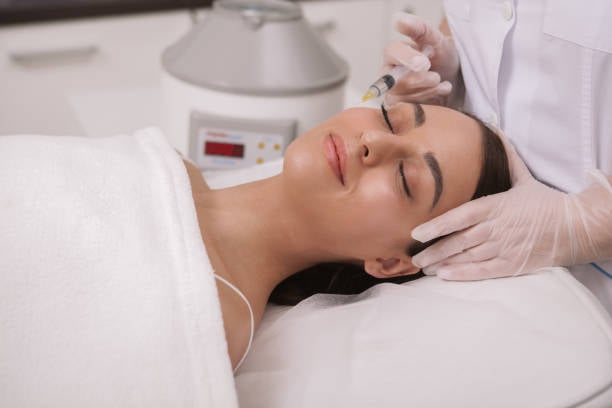
But Botox Cosmetic is a prescription medication, and the person holding the syringe is making decisions about your facial anatomy, muscle movement, dose, and placement. A few millimeters can matter.
The goal shouldn’t simply be fewer lines. At Skin Theory Aesthetics in Phoenix, we believe good injectable work should still look like you. Your forehead can look smoother without looking blank. Your brows can stay expressive. Friends may notice that you look rested without immediately knowing why.
That kind of result depends less on chasing the latest promotion and more on choosing the right injector.
Featured Snippet: How Do You Choose a Good Botox Injector?
Choose a Botox injector with appropriate medical licensure, specific training in cosmetic injectables, strong knowledge of facial anatomy, and experience creating natural-looking results. A good injector should evaluate your face in motion, discuss your goals and medical history, explain the proposed dose and placement, review risks, and never pressure you into unnecessary treatment.
Why Your Botox Injector Matters So Much
Botox Cosmetic contains onabotulinumtoxinA, a prescription neuromodulator that temporarily reduces activity in specifically targeted muscles.
The medication doesn’t decide where to go. Your injector does.
Two people can receive the same authentic product and have noticeably different results because the treatment plan is different.
Your outcome can be influenced by:
- Which muscles are treated
- Where each injection is placed
- How many units are used
- Your forehead height
- Your natural brow position
- Existing eyelid or brow heaviness
- The strength of your facial muscles
- How your muscles interact when you frown, smile, squint, or raise your eyebrows
- Previous treatments
- Your personal preference for movement
That’s why “How much is Botox per unit?” shouldn’t be your only question.
A better first question is, “Who is evaluating and treating my face?”
Who Can Perform Botox Injections in Arizona?
This is worth understanding because Botox injections are medical procedures, not salon services.
Arizona’s current nursing guidance classifies neuromodulator injections, including Botox, as an advanced Level III medical aesthetic procedure. Within nursing professions, the Arizona State Board of Nursing identifies appropriately trained RNs and APRNs as eligible to perform neuromodulator injections when applicable requirements for assessment, orders, training, competency, supervision, and consent are met.
The same guidance does not list LPNs, aestheticians, cosmetologists, or laser technicians as eligible to perform neuromodulator injections.
Physicians and appropriately qualified physician assistants may also provide medical aesthetic care within their respective Arizona scopes of practice. Arizona PA practice requirements can involve either a supervision agreement or, for qualifying experienced PAs, a collaborative practice arrangement.
The practical takeaway is simple:
Don’t assume someone’s job title on Instagram tells you everything you need to know.
Ask who is evaluating you, who is prescribing or ordering the treatment when required, and who will actually be holding the syringe.
A weekend Botox course isn’t a medical license.
Credentials Matter, but Credentials Aren’t the Whole Story
Medical licensure is the starting point.
It isn’t the finish line.
Someone can be legally permitted to perform a procedure and still have far less aesthetic experience than another provider. Injectables require a combination of medical knowledge, anatomy, technical skill, judgment, and an aesthetic eye.
Look for someone who understands not only where a muscle is, but what happens to the rest of your face when that muscle is weakened.
That’s where natural-looking Botox gets interesting.
Your frontalis, for example, helps elevate your eyebrows. Relaxing it too aggressively in the wrong patient may make the brows feel or appear heavier. Treating one part of the face without considering how neighboring muscles interact can also create an outcome that feels unbalanced.
Good injecting isn’t paint-by-numbers.
What a Good Botox Consultation Should Look Like
One of the easiest ways to evaluate an injector happens before a needle ever touches your skin.
A thoughtful consultation should feel like an assessment, not an assembly line.
Your provider should ask about your medical history, medications, previous toxin treatments, past results, and what you actually want to change.
Then comes one of the most important parts.
They should watch your face move.
You may be asked to:
- Frown
- Raise your eyebrows
- Smile
- Squint
- Relax your face
Why?
Because the lines you see in the mirror are only part of the story. Your injector needs to understand which muscles are producing them and how those muscles affect your brows, eyelids, and expressions.
Someone with a short forehead, low-set brows, and strong frontalis activity may need a very different plan from someone with a tall forehead and naturally high brows.
Same product. Different face. Different plan.
10 Things to Look for in a Botox Injector in Phoenix
1. Appropriate Medical Credentials
Verify that the person actually performing your injections has the appropriate Arizona license and scope of practice.
Don’t rely solely on the clinic’s credentials.
A practice can have an impressive medical director while your actual appointment is handled by someone else. It’s perfectly reasonable to ask, “Who will be doing my injections, and what are their credentials?”
2. Extensive Knowledge of Facial Anatomy
Knowing where wrinkles appear isn’t enough.
An experienced injector understands the muscles underneath them.
For example, forehead lines are generally associated with the frontalis muscle, while the vertical “11” lines between the eyebrows involve muscles including the corrugators and procerus.
Those muscles don’t work independently.
Treating one area changes the balance of forces across the face. That’s one reason a personalized muscle assessment matters so much.
3. A Conservative Approach
More units aren’t automatically better.
In fact, one of the best things an injector can sometimes tell you is:
“I don’t think you need more.”
At Skin Theory, our philosophy leans toward natural-looking results and aging gracefully rather than trying to erase every sign that your face moves.
You can always reassess after the treatment has fully taken effect. You can’t immediately take Botox back out once it’s injected.
4. Experience With Faces Like Yours
Ask how frequently your provider performs cosmetic neuromodulator injections.
Then get more specific.
If your concern is a heavy brow, asymmetry, a short forehead, strong frown lines, or preserving eyebrow movement, ask about that.
Experience isn’t simply a number of syringes.
It’s recognizing patterns.
5. Authentic Before-and-After Photos
Look for actual patient results from the injector or practice you’re considering.
Don’t just look for dramatic transformations. Look for faces that still look like faces.
Pay attention to:
- Brow position
- Symmetry
- Forehead movement
- Crow’s feet
- Frown lines
- Whether the patient still looks expressive
- Consistency between photographs
If you want a subtle result, a gallery full of completely motionless foreheads probably isn’t the best match for your aesthetic.
6. Clear Communication About Units
Your injector should be able to explain approximately how many units they’re recommending and why.
Botox Cosmetic has labeled dosing patterns for its approved cosmetic indications, but that doesn’t mean every person receives the same total treatment plan.
Muscle strength, anatomy, treatment areas, sex, previous response, and desired degree of movement all matter.
Ask:
“How many units are you recommending for me, and where are you putting them?”
That’s a much more useful conversation than buying a vaguely defined “forehead package.”
7. Transparent Pricing
Searching for affordable Botox in Phoenix is perfectly reasonable.
Cheap Botox and good-value Botox aren’t necessarily the same thing.
When comparing prices, find out:
- Price per unit
- Estimated number of units
- Total estimated treatment cost
- Which brand you’re receiving
- Whether follow-up is included
- How touch-ups are handled
- Whether legitimate manufacturer rewards are available
A low advertised price isn’t particularly useful if you don’t know how many units you’re actually receiving.
8. A Clear Follow-Up Policy
Botox isn’t fully judged when you walk out the door.
Your provider should explain when they want the result evaluated and what happens if you have a concern.
Botox Cosmetic generally begins taking effect over the first several days, with the result continuing to develop afterward. Depending on the treatment area, evaluating the finished result around the two-week point is common clinical practice.
That’s when subtle asymmetry or the need for an adjustment can be assessed more meaningfully.
Ask about this before treatment rather than after something bothers you.
9. A Plan for Complications
Botox Cosmetic has a well-established safety record when appropriately used, but it is still a prescription medication with potential adverse effects.
Possible aesthetic complications can include unwanted asymmetry, brow or eyelid ptosis, and a result that feels too weak or too strong. Botulinum toxin products also carry an FDA boxed warning regarding the potential for effects to spread beyond the injection site, with serious symptoms possible in rare circumstances.
Ask your provider what happens if you have a problem.
There should be a real answer.
10. Continuity of Care
There’s value in seeing someone who knows your face.
A good injector keeps track of what was treated, the dose used, how you responded, what you loved, and what you’d change next time.
Maybe 20 units in one area gave you exactly what you wanted. Maybe you wanted a little more eyebrow movement. Maybe one side needed slightly different placement.
Those details become useful at your next appointment.
You’re building a treatment history, not starting from scratch every three or four months.
What Causes the “Frozen Botox” Look?
Botox itself doesn’t have a “natural” setting and a “frozen” setting.
The treatment plan determines how much movement remains.
A very smooth, minimally mobile forehead may actually be exactly what one patient wants. Another person may hate that result.
Problems arise when the treatment doesn’t match the patient’s anatomy or goals.
A heavy or unnatural result may be influenced by factors such as:
- Excessive weakening of muscles that help support the brow
- Placement that doesn’t account for forehead height
- Failing to recognize pre-existing brow or eyelid heaviness
- Treating lines instead of analyzing the muscles creating them
- Using a standardized injection pattern for every patient
- Pursuing complete stillness when the patient wanted natural movement
This is why one of our favorite questions during a consultation is simply:
“How much movement do you want to keep?”
There’s no universally correct answer.
There’s only the answer that fits your face and your goals.
Why a Heavy Brow Isn’t Always “Bad Botox”
This is another area where nuance matters.
If someone’s eyebrows feel heavy after treatment, it’s tempting to assume the injector simply used too much Botox.
Sometimes dose or placement contributed. But anatomy matters too.
Some people naturally rely heavily on their forehead muscles to keep their eyebrows elevated. If those muscles are relaxed without recognizing that compensation pattern beforehand, the brow can feel heavier.
That’s why an injector should look at your brow and eyelid position before treatment.
Your resting anatomy contains clues about what should and shouldn’t be relaxed.
Botox Pricing in Phoenix: Don’t Shop by Unit Price Alone
Botox is often advertised by the unit, which makes comparison shopping tempting.
Suppose one clinic advertises an unusually low unit price while another charges more. The cheaper option isn’t automatically a bad choice, and the more expensive option isn’t automatically better.
You need more information.
Compare:
Total treatment cost + appropriate dosing + injector expertise + follow-up + quality of the result.
That tells you far more than unit price alone.
Be Careful With Botox Deals That Feel Too Good to Be True
A promotion isn’t automatically a red flag. Legitimate practices run specials too.
What should concern you is a combination of bargain pricing and poor clinical standards.
Be cautious when you encounter:
- No real consultation
- No medical history
- Unclear provider credentials
- No explanation of units
- No treatment record
- Refusal to identify the product
- Pressure to buy more areas
- No follow-up plan
- No one available if something goes wrong
You aren’t buying units.
You’re paying someone to make a series of medical and aesthetic decisions about your face.
Should Your Injector Show You the Botox Vial?
You should know which product you’re receiving.
There are several FDA-approved botulinum toxin products used in aesthetic medicine, and they aren’t simply interchangeable bottles with different logos.
At Skin Theory, Botox and Jeuveau are among the neuromodulator options available. The right conversation isn’t about declaring one brand universally “best.” It’s about selecting an appropriate product and treatment plan for the patient.
If you’re unsure, ask:
“Which neuromodulator are we using today?”
And keep track of the brand, treatment areas, and units used.
That information becomes particularly useful if you ever switch providers.
Botox Units Aren’t the Same Across Every Brand
This is an easy detail to miss when comparing prices.
Botulinum toxin potency units are product-specific. You shouldn’t assume that a unit of Botox Cosmetic is directly interchangeable with a unit of every other neuromodulator.
That’s especially important when a clinic advertises a very low “per unit” price for another product and compares it directly with Botox.
Compare the recommended treatment and total cost, not unit price in isolation across different brands.
Botox vs. Jeuveau: Does the Brand Matter More Than the Injector?
For most cosmetic patients, provider selection deserves at least as much attention as brand selection.
Botox Cosmetic and Jeuveau are both botulinum toxin type A products, but they’re separate prescription medications with their own labeling and manufacturing.
A skilled injector should understand the product they’re using and, just as importantly, understand your face.
Brand loyalty can’t compensate for poor placement.
What About Lines Botox Can’t Fix?
This is where honest aesthetic medicine matters.
Not every wrinkle needs more toxin.
Botox is particularly useful for dynamic wrinkles, meaning lines created or worsened by repeated muscle movement.
But if a line has become deeply etched into the skin at rest, simply continuing to increase the toxin dose may not produce the result you want.
Other concerns may respond better to treatments aimed at skin quality, texture, collagen, or volume.
Depending on your skin and goals, that might include:
- RF microneedling
- SkinPen microneedling
- Chemical peels
- Professional skincare
- Other appropriately selected aesthetic treatments
The goal isn’t to throw five treatments at your face.
It’s to identify why the line is there and choose the treatment that addresses it.
Questions to Ask a Botox Injector Before Treatment
You don’t need to interrogate your provider like you’re taking a deposition.
But a few good questions can tell you a lot:
- What is your medical license and injectable training?
- How frequently do you perform cosmetic neuromodulator injections?
- What do you notice about my facial anatomy and movement?
- Which muscles are causing the lines that bother me?
- Which product do you recommend, and why?
- Approximately how many units would you recommend?
- How much movement do you expect me to retain?
- Is there anything you would not treat on my face?
- What are the potential side effects and risks?
- When should I expect the treatment to take effect?
- When should I come back for evaluation?
- How do you handle asymmetry or an unwanted result?
- Who should I contact if I develop a concerning symptom?
You don’t necessarily need a twenty-minute answer to every question.
You’re listening for something more important: Does this person understand what they’re doing, and are they actually looking at me as an individual?
Botox Injector Red Flags to Watch For
Some warning signs are easy to spot once you know what you’re looking for.
We’d be cautious about a Botox clinic or injector who:
- Doesn’t evaluate your facial movement
- Doesn’t ask about medical history
- Can’t clearly explain their credentials
- Won’t identify the product being injected
- Can’t tell you approximately how many units you’re receiving
- Uses exactly the same treatment map for everyone
- Guarantees a particular result
- Dismisses possible side effects
- Pushes additional treatment you didn’t ask about
- Doesn’t discuss your preferred amount of movement
- Has no follow-up process
- Has no clear plan for complications
- Makes you feel rushed when you’re asking reasonable questions
One more red flag deserves its own sentence:
An injector who can’t tell you “no” isn’t necessarily doing you a favor.
Sometimes the right recommendation is fewer units, a different treatment, or no treatment at all.
What to Tell Your Injector Before Botox
A good consultation works both ways.
Be honest about your health history, medications, previous treatments, and anything unusual that happened after prior injections.
Your provider should know about relevant medical conditions, particularly neuromuscular disorders, previous reactions to botulinum toxin products, infection at a proposed injection site, and other medications or treatments that could affect the decision to treat.
Also tell them if you’re pregnant, planning pregnancy, or breastfeeding so your clinician can discuss the available safety information and whether treatment should be deferred.
And don’t forget the aesthetic details.
Bring up things like:
- “My brows already feel heavy.”
- “I hated how frozen I looked last time.”
- “I loved my last result, but it only lasted about two months.”
- “One eyebrow naturally sits higher.”
- “I still want to be able to raise my eyebrows.”
- “I don’t mind less movement. I want my forehead very smooth.”
Those comments are useful.
What Should You Do After Botox?
Your injector should provide instructions based on your treatment.
The most important rule is to follow their specific medical guidance, rather than a random list you found online.
Avoid rubbing or aggressively manipulating the treated areas immediately afterward. Your provider may also give you instructions about exercise, lying down, facial treatments, or other activities depending on their protocol.
Minor injection-site redness, tenderness, swelling, or bruising can occur.
Don’t panic because you can still move your forehead the next morning. Neuromodulators need time to work.
More importantly, don’t start judging symmetry too early.
Give the treatment time to develop before deciding one eyebrow needs “just one more unit.”
If you develop concerning symptoms, especially difficulty swallowing, speaking, or breathing, seek immediate medical attention.
How Long Should Good Botox Results Last?
There isn’t a single timeline that applies to everyone.
Botox Cosmetic results commonly last around three to four months, but individual experiences vary based on treatment area, dose, muscle activity, previous response, and other factors.
If your treatment seems to disappear unusually quickly, don’t immediately assume you’re “immune to Botox.”
True neutralizing antibody-related resistance can occur, but it appears to be uncommon in aesthetic use. A short-lived result can have other explanations, including dose, treatment pattern, individual muscle strength, or simply how you personally respond.
Bring your previous treatment record to your next appointment whenever possible.
Knowing the brand, number of units, areas treated, and duration gives your injector much better information than “I got Botox somewhere last spring.”
Should You Stay With the Same Botox Injector?
You certainly don’t have to.
If you’re unhappy, uncomfortable, or simply want another opinion, you can change providers.
But when you’ve found someone who consistently understands your anatomy and aesthetic preferences, continuity can be valuable.
Over time, your injector learns things such as:
- How strongly you respond
- Which areas wear off first
- How much forehead movement you prefer
- Whether one side needs slightly different placement
- How your brow responds
- Which dose gave you your favorite result
That’s where aesthetic treatment starts feeling truly personalized.
The Skin Theory Approach to Botox in Phoenix
At Skin Theory Aesthetics, Heather Starks, PA-C takes a conservative, personalized approach to injectable treatments.
The goal isn’t to make every forehead look the same.
It’s to understand how your face moves, which lines bother you, how much expression you want to preserve, and what will create a refreshed result that still feels like you.
Sometimes that means Botox. Sometimes Jeuveau may be worth discussing. And sometimes the concern someone calls a “wrinkle” is actually better addressed with skin-quality treatments such as RF microneedling, SkinPen, a chemical peel, or a thoughtfully selected home skincare routine.
That’s the value of having someone evaluate the whole picture instead of simply counting lines.
If you’re searching for a Botox injector in Phoenix, AZ, schedule a consultation with Heather at Skin Theory Aesthetics. Come with questions. A good injector should be happy you asked them.
Frequently Asked Questions About Choosing a Botox Injector in Phoenix
How long does Botox last?
For many cosmetic patients, results last roughly three to four months, although individual response varies. Dose, treatment area, muscle activity, and personal response can affect duration.
Will Botox make me look frozen?
It doesn’t have to. The amount of movement retained depends heavily on treatment goals, anatomy, dose, and placement. Tell your injector explicitly if maintaining natural facial expression is important to you.
Should my injector offer a two-week Botox follow-up?
Many aesthetic practices use approximately two weeks as a useful point for evaluating the developed result, particularly for new patients or when adjustments may be needed. Ask about the practice’s follow-up and touch-up policy before treatment.
How can I verify an injector’s credentials?
Ask for the provider’s full name and professional credential, then verify their current license through the appropriate Arizona licensing board. Don’t assume that working inside a medical spa automatically confirms the qualifications of every person providing treatment.
What’s the biggest red flag when choosing a Botox injector?
A provider who seems more interested in getting you into the chair than understanding your face should give you pause. Good injectable care begins with assessment, informed consent, realistic expectations, and a treatment plan tailored to your anatomy rather than a standard injection template.