A good skincare routine can do a lot. The right cleanser, moisturizer, active ingredients, and daily sunscreen can protect your skin, support a healthy barrier, and help manage concerns like dryness, oiliness, mild breakouts, and uneven tone. But there’s a point where another serum isn’t going to solve the problem. Acne scars, established wrinkles, skin …
A good skincare routine can do a lot. The right cleanser, moisturizer, active ingredients, and daily sunscreen can protect your skin, support a healthy barrier, and help manage concerns like dryness, oiliness, mild breakouts, and uneven tone.
But there’s a point where another serum isn’t going to solve the problem.
Acne scars, established wrinkles, skin laxity, stubborn pigmentation, and deeper textural changes involve structures that topical skincare simply cannot fully address. That’s where professional treatments at a medical spa in Phoenix, AZ can become valuable.
The best approach usually isn’t choosing one or the other. At Skin Theory Aesthetics, we view professional treatments and at-home skincare as two parts of the same long-term strategy. One creates targeted change, while the other helps protect and maintain it.
Featured Snippet: Is Professional Skincare Better Than At-Home Skincare?
At-home skincare and professional medical spa treatments serve different purposes. Daily skincare protects the skin barrier, maintains hydration, manages certain surface concerns, and helps prevent UV damage. Professional treatments can address concerns that require more targeted intervention, including wrinkles, acne scars, pigmentation, uneven texture, and skin laxity. For many patients, combining both provides the most complete approach.
Why Phoenix Skin Needs a Little Extra Attention
Skin doesn’t exist in a vacuum, and living in Phoenix presents a few challenges that someone in a cooler, more humid climate may not experience to the same degree.
Year-round sunshine and intense UV exposure contribute to photoaging, including:
- Fine lines and wrinkles
- Uneven pigmentation
- Sun spots
- Changes in skin texture
- Loss of elasticity over time
Then there’s our famously dry air. Low humidity can make it harder for skin to retain moisture, especially if you’re already using retinoids, exfoliating acids, or other active products.
That combination makes prevention particularly important here.
A thoughtfully designed home routine helps defend your skin every day. Professional treatments can step in when years of sun exposure, collagen loss, acne, or normal aging have created changes that daily skincare alone isn’t equipped to correct.
What At-Home Skincare Does Best
Home skincare isn’t the “lesser” version of professional care. It’s the foundation.
You spend far more days caring for your skin at home than you ever will in a treatment room. What you do every morning and evening can have a major influence on both the health of your skin and the longevity of professional results.
Cleansing Without Stripping the Skin
Cleansing removes sunscreen, makeup, excess oil, pollutants, and everyday debris.
The key is getting the skin clean without leaving it tight and stripped. In Phoenix’s dry climate, overly aggressive cleansing can make an already compromised skin barrier feel even worse.
Maintaining Hydration and Barrier Health
Ingredients such as humectants, ceramides, and other barrier-supporting moisturizers help the skin hold onto water and maintain its protective outer layer.
This becomes especially valuable during dry Arizona weather and after certain professional treatments.
Preventing Sun Damage
If there is one part of an anti-aging skincare routine we wouldn’t skip in Phoenix, it’s sunscreen.
Broad-spectrum SPF helps protect against ultraviolet radiation that contributes to premature skin aging and pigmentation. It also helps preserve the results you’re paying for with professional treatments.
You can spend a lot of money trying to correct sun damage, but preventing additional damage every morning is considerably easier.
Managing Everyday Skin Concerns
Depending on the ingredients used, at-home products can also help with:
- Mild acne
- Oiliness
- Dryness
- Uneven tone
- Surface dullness
- Mild pigmentation
- Fine lines
- General prevention
The right routine should be specific to your skin rather than built around whatever happens to be trending on social media.
Where At-Home Skincare Reaches Its Limits
There are biological limits to what a topical product can accomplish.
A serum cannot physically relax a facial muscle that creates a frown line. Moisturizer cannot tighten significantly loose skin. A topical exfoliant isn’t going to remodel an established acne scar in the same way that a controlled professional procedure can.
That doesn’t mean the skincare isn’t working.
It means you’re asking it to do a different job.
Professional treatment may become worth considering when you’re dealing with concerns such as:
- Acne scarring
- Persistent texture irregularities
- Enlarged pores
- Established sun damage
- Stubborn hyperpigmentation
- Fine lines that remain visible at rest
- Crow’s feet and frown lines caused by muscle movement
- Crepey skin
- Mild to moderate skin laxity
- Loss of firmness
- Changes around the eyes or jawline
The important question isn’t simply, “What’s the strongest treatment?”
It’s, “What is actually causing the concern?”
Once you know that, choosing the right treatment becomes much easier.
Medical-Grade vs. Over-the-Counter Skincare: What’s the Real Difference?
There’s a lot of marketing surrounding the phrase “medical-grade skincare,” so this deserves a little clarification.
Medical-grade does not automatically mean better, and over-the-counter does not automatically mean ineffective.
Excellent OTC products exist.
What matters is the formulation, active ingredients, concentration, stability, supporting research, how the product is used, and whether it’s appropriate for your skin.
Over-the-Counter Skincare
OTC products are readily available without a prescription and can be excellent for:
- Cleansing
- Moisturizing
- Daily sunscreen
- Basic antioxidant support
- Mild acne
- Gentle exfoliation
- General skin maintenance
For someone with healthy skin who primarily wants prevention, a carefully selected OTC routine may be perfectly adequate.
Professional and Prescription Skincare
Professionally recommended skincare may include higher-strength or specialized formulations designed to target a particular concern. Prescription products, such as prescription-strength retinoids, are regulated differently and require appropriate medical guidance.
Depending on your needs, a professional regimen may incorporate ingredients such as:
- Retinoids
- Vitamin C and other antioxidants
- Alpha hydroxy acids
- Beta hydroxy acids
- Peptides
- Pigment-targeting ingredients
- Ceramides and barrier-supporting ingredients
The real advantage of working with a knowledgeable provider isn’t simply getting a product with “medical-grade” written on the label.
It’s having someone determine which ingredients your skin actually needs, how strong they should be, and how to use them without unnecessarily irritating your skin.
More isn’t always better.
Especially with Phoenix skin that is already dealing with intense sun and dry air, piling retinoids, exfoliating acids, scrubs, and other actives on top of one another can quickly backfire.
How Professional Medical Spa Treatments Are Different
Professional aesthetic treatments allow providers to target concerns that exist beyond what daily topical care can reasonably accomplish.
Different procedures address different biological causes.
That distinction matters.
RF Microneedling for Collagen Remodeling
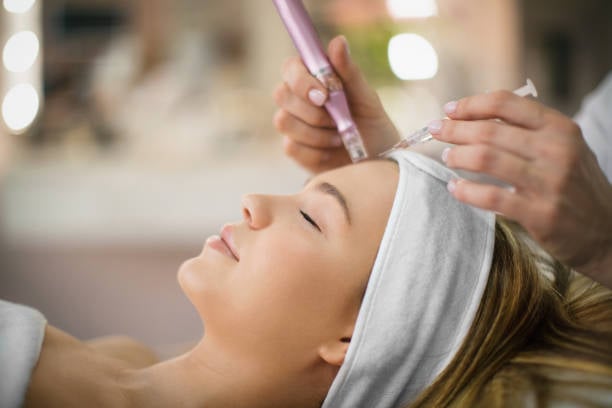
At Skin Theory Aesthetics, Vybe RF microneedling combines microneedling with radiofrequency energy.
The treatment creates controlled micro-injuries while delivering RF energy into the tissue. The resulting healing response can support collagen remodeling and may help improve:
- Acne scars
- Fine lines
- Enlarged pores
- Uneven texture
- Mild skin laxity
- Overall skin quality
If someone’s main concern is structural texture or firmness, simply switching moisturizers isn’t addressing the same problem.
Chemical Peels for Surface Renewal and Pigmentation
Professional chemical peels use carefully selected exfoliating agents to remove damaged surface cells and encourage renewal.
Depending on the peel and patient, they may be used for:
- Sun damage
- Dullness
- Uneven pigmentation
- Acne
- Rough texture
- Fine lines
Peel selection matters considerably in Phoenix because sun exposure during recovery can increase the risk of unwanted pigmentation.
Timing, peel depth, skin tone, aftercare, and lifestyle should all factor into the treatment plan.
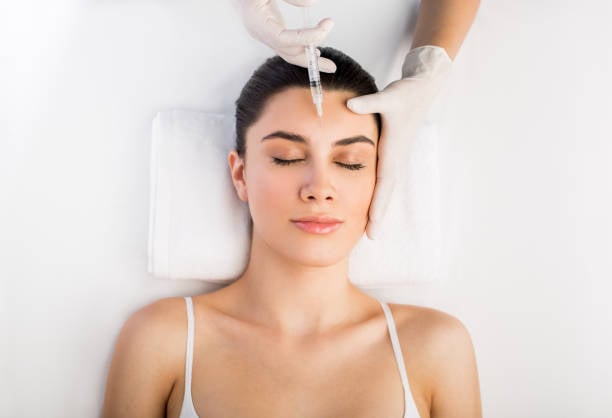
Botox and Jeuveau for Dynamic Wrinkles
Some wrinkles aren’t primarily a skin problem.
They’re a movement problem.
Every time you frown, squint, smile, or raise your eyebrows, facial muscles fold the overlying skin. Eventually, those repeated folds can become visible even when your face is resting.
Neuromodulators such as Botox and Jeuveau temporarily reduce targeted muscle activity to soften:
- Frown lines between the brows
- Forehead lines
- Crow’s feet
- Other expression-related lines when appropriately treated
No topical skincare product works through that same mechanism.
Your skincare still matters, but it isn’t going to tell your corrugator muscle to relax.
Subnovii Plasma Pen for Targeted Fine Lines and Laxity
Subnovii uses plasma energy to create controlled treatment points that stimulate a healing and tissue-remodeling response.
It can be particularly useful for carefully selected patients concerned with:
- Crepey skin
- Fine lines around the mouth
- Fine lines around the eyes
- Mild eyelid laxity
- Small, targeted areas of loose skin
It serves a very different purpose from a daily cream or serum.
At-Home Skincare vs. Medical Spa Treatments at a Glance
| Concern | At-Home Skincare | Professional Treatment |
| Daily UV protection | Excellent | Does not replace sunscreen |
| Basic hydration | Excellent | Can complement home care |
| Mild acne | Often helpful | Useful for persistent concerns |
| Surface dullness | Helpful | Peels can provide more targeted exfoliation |
| Sun spots and pigmentation | Can gradually help | Peels and other professional treatments may provide stronger correction |
| Fine lines | Can help prevent and soften | Several treatment options depending on the cause |
| Dynamic wrinkles | Limited | Botox or Jeuveau directly address muscle activity |
| Acne scars | Limited | Microneedling and other procedures can target scar remodeling |
| Enlarged pores and texture | Moderate | RF microneedling may create more significant improvement |
| Skin laxity | Limited | RF microneedling, Subnovii, or other tightening procedures may be appropriate |
| Ongoing maintenance | Essential | Periodic treatments complement daily care |
The takeaway is pretty simple.
Home skincare protects and maintains. Professional treatments can create targeted changes that skincare alone cannot.
Signs It May Be Time to Consider Professional Treatment
Not everyone needs a procedure.
If your skin is healthy and you’re happy with it, prevention may be the smartest treatment plan you can choose.
Consider scheduling a professional consultation when:
- You’ve used appropriate products consistently but your concern has plateaued
- Pigmentation keeps returning
- Acne has left visible scars
- Your skin texture remains rough or uneven
- Fine lines have become visible when your face is relaxed
- You’re beginning to notice skin laxity
- Your concern seems to be getting worse despite a good routine
- You’re unsure which products or treatments actually make sense
A consultation doesn’t automatically mean you’ll leave with an appointment for a procedure.
Sometimes the answer really is, “Let’s fix your home routine first.”
That’s still a productive consultation.
Building a Combined Skincare Plan That Actually Works

The most effective long-term strategy usually looks less like chasing individual treatments and more like building a system.
Professional procedures address specific concerns. Home care protects the progress between appointments.
Here’s what that can look like in practice.
RF Microneedling + Barrier Support
RF microneedling stimulates a controlled healing response.
During the initial recovery period, the focus shifts away from aggressive anti-aging ingredients and toward gentle cleansing, hydration, barrier support, and sun protection according to your provider’s instructions.
Once healed, an appropriate active skincare routine can resume.
Chemical Peels + Pigmentation Prevention
A peel may help improve surface pigmentation and uneven tone, but it won’t stop Arizona UV exposure from creating new damage.
Long-term success requires:
- Daily sunscreen
- Appropriate antioxidants
- Pigment-supporting skincare when recommended
- Smart sun habits
- Maintenance treatments when needed
Correcting pigmentation without preventing new pigmentation can turn into an expensive game of catch-up.
Botox or Jeuveau + Anti-Aging Skincare
Neuromodulators address muscle movement.
Skincare addresses the skin itself.
Combining the two allows you to approach expression lines from different angles. The injectable reduces repeated folding while sunscreen, antioxidants, retinoids when appropriate, and moisturizers support the health and appearance of the overlying skin.
Subnovii + Long-Term Prevention
After the skin has completely healed from a Subnovii treatment, daily UV protection and a carefully selected home regimen help protect the improvement.
This is particularly important around the eyes, where Phoenix sunshine contributes to both UV exposure and constant squinting.
What Should a Good Phoenix Skincare Routine Include?
There isn’t one perfect routine for everyone, but most healthy routines don’t need twelve steps.
For many patients, a sensible foundation looks something like this:
Morning
- Gentle cleanser as needed
- Targeted antioxidant or treatment product
- Moisturizer based on skin type
- Broad-spectrum sunscreen
Evening
- Cleanser
- Targeted treatment product, such as a retinoid when appropriate
- Moisturizer or barrier-supporting product
Other products can be added for acne, pigmentation, dryness, sensitivity, or specific treatment goals.
The trick is resisting the temptation to add everything at once.
When we see irritated skin, it’s sometimes not because the patient isn’t doing enough.
It’s because they’re doing too much.
The Most Common At-Home Skincare Mistakes We See
Using Too Many Active Ingredients
Retinoids, glycolic acid, salicylic acid, vitamin C, exfoliating masks, and scrubs can all have a place.
They don’t necessarily need to be used together.
An irritated skin barrier can create redness, dryness, sensitivity, and sometimes worsen the very problems you’re trying to treat.
Changing Products Too Quickly
Skin improvement takes time.
Constantly switching products makes it difficult to know what is helping and what is causing irritation.
Skipping Sunscreen Because You’re Mostly Indoors
Phoenix UV exposure adds up.
Driving, errands, walking through parking lots, outdoor lunches, and weekend activities all count.
Assuming Expensive Means Effective
A beautiful bottle does not guarantee a better formulation.
Spend based on ingredients, formulation, and what your skin actually needs.
Trying to Treat a Structural Problem With Skincare Alone
If you’ve spent hundreds of dollars cycling through creams for acne scars or loose skin, the problem may not be the brand.
You may simply need a different category of treatment.
How to Choose a Medical Spa in Phoenix
Once you’ve decided to explore professional care, don’t choose a provider based solely on who has the biggest discount that month.
A reputable Phoenix medical spa should offer more than a menu of treatments.
Look for Qualified Medical Oversight
Confirm who performs the treatment, their credentials, and who provides medical oversight.
At Skin Theory Aesthetics, care is provided by Heather Starks, PA-C, allowing treatment decisions to incorporate medical history, skin condition, anatomy, and appropriate patient selection.
Expect a Real Consultation
Your provider should ask about:
- Your goals
- Medical history
- Medications
- Previous procedures
- Current skincare
- Sun exposure
- Lifestyle
- Skin sensitivities
- Downtime tolerance
- Budget
Someone should look at your skin before deciding what your skin needs.
Ask Why a Treatment Is Being Recommended
A provider should be able to explain:
- What is causing the concern
- How the recommended procedure works
- Why it is appropriate for you
- What results are realistic
- How many sessions may be needed
- What recovery looks like
- Potential risks
- What you should do at home
If the explanation amounts to “this is our most popular package,” keep asking questions.
Look for an Approach That Includes Home Care
A good medical spa shouldn’t act as though everything that happens outside the treatment room is irrelevant.
Daily skincare can determine how well your skin tolerates treatment, how smoothly it recovers, and how effectively you protect your results afterward.
So, Which Is Better: Home Skincare or Professional Treatments?
Neither wins.
They solve different problems.
If you’re primarily concerned with maintaining hydration, preventing sun damage, controlling mild oiliness, or keeping otherwise healthy skin in good condition, at-home skincare may be all you need.
If you’re trying to improve acne scars, persistent pigmentation, established wrinkles, dynamic expression lines, crepey skin, or laxity, professional aesthetic treatments may address mechanisms that topical products cannot.
And if you’re serious about long-term skin health?
You’ll probably use both.
Build a Skincare Plan Around Your Skin, Not the Latest Trend
There will always be another trending ingredient, viral serum, miracle device, or treatment promising to transform your skin.
Your skin doesn’t care what’s trending.
It responds to biology, environment, consistency, and appropriate treatment.
At Skin Theory Aesthetics in Phoenix, Heather Starks, PA-C takes a personalized approach to both professional treatments and at-home skincare. Rather than adding procedures for the sake of doing more, the goal is to understand what’s actually happening with your skin and build a plan around it.
That may mean improving your daily routine.
It may mean introducing a professional treatment.
Often, it’s a thoughtful combination of both.
If you’ve reached the point where your current skincare routine isn’t giving you the changes you hoped for, schedule a personalized consultation at Skin Theory Aesthetics. We’ll help you determine what belongs in your bathroom cabinet, what belongs in the treatment room, and what your skin probably doesn’t need at all.
Frequently Asked Questions
Will professional treatments replace my daily skincare routine?
No. Professional treatments and home skincare serve different purposes. Procedures can target concerns such as acne scars, wrinkles, pigmentation, and skin laxity, while your daily routine provides ongoing cleansing, hydration, treatment, and UV protection. Maintaining good home care can also help protect the results of professional treatments.
How quickly do medical spa treatments show results compared with home skincare?
It depends on the treatment and concern. Some professional procedures produce visible changes relatively quickly, while collagen-stimulating treatments may continue improving the skin for several months. Most topical skincare products also require consistent use for weeks or months before their full benefit can be evaluated.
Are over-the-counter products as effective as medical-grade skincare?
Some OTC products are excellent and may be completely appropriate for cleansing, moisturizing, sunscreen, and certain active ingredients. Professional or prescription products may offer different formulations or strengths for specific concerns. The best choice depends on the product itself and your skin, not simply whether the label says “medical-grade.”
Is medical-grade skincare worth the cost?
It can be when the formulation targets a concern you actually have. A professionally selected product that you consistently use is generally a better investment than an expensive routine filled with products your skin doesn’t need.
Do I need a consultation before starting professional skincare treatments?
Yes. A consultation helps determine your skin type, concern, medical history, previous treatments, lifestyle, and goals before recommending a procedure. This is particularly important for treatments involving controlled injury, heat, injectables, or stronger chemical exfoliation.
Can I use over-the-counter products with professional treatments?
Often, yes. However, certain ingredients may need to be temporarily stopped before or after treatments. Retinoids, exfoliating acids, scrubs, and other strong actives are common examples. Follow the specific pre-treatment and post-treatment instructions provided for your procedure.
How often should I get professional skincare treatments?
There is no universal schedule. Chemical peels may be performed as a series, neuromodulators are typically maintained periodically as their effects wear off, and collagen-stimulating procedures may be spaced weeks apart before transitioning to maintenance. Your schedule should reflect the treatment, your response, and your goals.
What professional treatment is best for sun-damaged skin in Phoenix?
It depends on how the sun damage presents. Chemical peels may help with pigmentation and surface texture, while RF microneedling can address texture and collagen-related changes. A professional evaluation is important because skin tone, degree of damage, and pigmentation risk influence treatment selection.
What’s the best treatment for acne scars?
RF microneedling is one option for certain acne scars because it creates controlled micro-injuries and delivers radiofrequency energy to encourage remodeling. Scar type matters, however, and not every acne scar should be treated the same way.
Can skincare products tighten loose skin?
Topical products can improve hydration and the appearance of the skin, and ingredients such as retinoids can support skin quality over time. They cannot physically tighten moderate or significant laxity in the same way that appropriately selected professional or surgical treatments can.
Can skincare get rid of forehead wrinkles?
It depends on the wrinkle. Skincare can support collagen, hydration, and overall skin quality, but forehead lines caused by repeated muscle movement are dynamic wrinkles. Neuromodulators such as Botox or Jeuveau directly address the muscle activity responsible for those lines.
Should I use a retinoid if I live in Phoenix?
Many people can benefit from an appropriately selected retinoid, but tolerance varies. Because retinoids can cause dryness and irritation, Phoenix patients should pay particular attention to moisturizer, barrier health, and daily sunscreen. Prescription-strength products should be used according to medical guidance.
Why is sunscreen so important in Arizona?
Phoenix receives abundant sunshine, and cumulative UV exposure contributes to photoaging, pigmentation, and collagen breakdown. Daily broad-spectrum sunscreen is one of the most valuable steps you can take to prevent additional damage and protect the results of professional treatments.
What should I look for during a Phoenix med spa consultation?
Look for a thorough skin and medical assessment, clear provider credentials, realistic expectations, discussion of risks and recovery, and an explanation of why each recommendation fits your specific concern. A good consultation should feel educational, not like a sales pitch.
Do I need professional treatments if I’m happy with my skin?
No. Professional aesthetic treatment isn’t a requirement for healthy skin. If you’re happy with your skin, a consistent routine built around cleansing, appropriate hydration, targeted ingredients when needed, and excellent sun protection may be exactly what you need.