If you're considering a skin tightening treatment, one of the first questions is usually pretty practical: How many appointments am I actually signing up for? For many patients, the answer is more than one. But it depends heavily on the treatment, the area being treated, how much laxity is present, your age and skin quality, …
If you’re considering a skin tightening treatment, one of the first questions is usually pretty practical: How many appointments am I actually signing up for?
For many patients, the answer is more than one. But it depends heavily on the treatment, the area being treated, how much laxity is present, your age and skin quality, and what you consider a successful result.
Someone in their late 30s noticing the beginning of jawline softness has a very different starting point than someone addressing significant loose skin after weight loss. Treating delicate crepey skin around the eyes is also different from rebuilding firmness throughout the lower face and neck.
At Skin Theory Aesthetics in Phoenix, Heather Starks, PA-C builds the treatment plan around those differences rather than automatically recommending the same package to everyone.
Featured Snippet: How Many Skin Tightening Sessions Are Needed?
Most patients need a series of skin tightening treatments for visible results. RF microneedling commonly involves about three sessions spaced four to six weeks apart, while targeted Subnovii Plasma Pen treatment may require fewer sessions. Results develop gradually as collagen remodels, with continued improvement over several weeks to months.
Why Skin Tightening Takes Time
To understand the number of treatments, it helps to understand what you’re actually trying to change.
Skin gets much of its firmness and structure from proteins such as collagen and elastin. With age, UV exposure, hormonal changes, genetics, and other factors, that supportive framework changes.
In Phoenix, cumulative sun exposure deserves particular attention. Years of Arizona UV exposure can contribute to collagen breakdown, pigmentation, fine lines, and other signs of photoaging.
Professional skin tightening treatments cannot stop that process altogether, but appropriately selected procedures can stimulate controlled tissue remodeling.
Skin Theory uses two different technologies for patients concerned with laxity and skin quality:
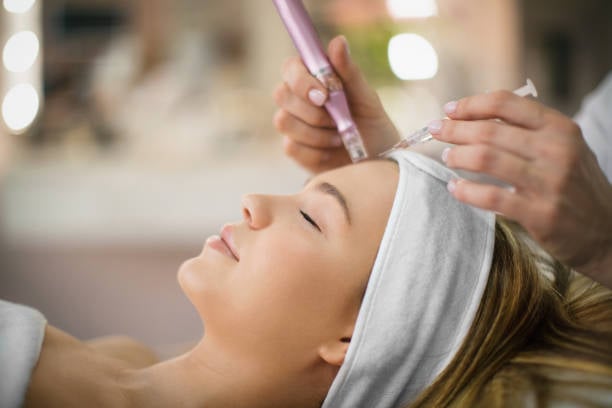
- Vybe RF Microneedling
- Subnovii Plasma Pen
They aren’t interchangeable, and they shouldn’t be treated as though they have identical session counts or recovery.
When Do Skin Tightening Results Become Visible?
Skin tightening isn’t an instant transformation.
Some patients notice early changes in texture or a temporary feeling of tightness relatively soon after treatment. The more meaningful changes take longer because collagen remodeling is a biological process.
A realistic timeline often looks something like this:
First Few Days
Your appearance is influenced by the immediate treatment response.
Depending on the procedure, this can include redness, swelling, warmth, tightness, or visible treatment marks.
This is not the time to judge your final result.
Weeks 2 to 4
The skin has largely moved beyond its initial recovery period.
Some patients begin noticing improvements in texture and skin quality, although structural changes may still be subtle.
Weeks 4 to 12
This is where collagen-related improvement becomes more interesting.
Firmness, texture, and the appearance of mild laxity may continue changing as tissue remodels.
Months 3 to 6
Collagen remodeling can continue for months after treatment.
For a treatment series, that means your best result may not be apparent immediately after your final appointment.
This is one reason we like consistent before-and-after photos. Slow improvement is surprisingly difficult to notice when you see your own face every morning.
RF Microneedling vs. Subnovii Plasma Pen
Both treatments can be used as part of a skin rejuvenation plan, but they work differently.
| Vybe RF Microneedling | Subnovii Plasma Pen | |
| How it works | Microneedles plus controlled RF energy | Controlled plasma energy applied at precise treatment points |
| Often considered for | Texture, collagen remodeling, acne scars, mild laxity, overall firmness | Small areas of fine lines, crepey skin, and mild laxity |
| Common areas | Face, jawline, neck and other appropriate areas | Around eyes, around mouth and other targeted areas |
| Typical approach | Usually performed as a series | May require fewer sessions for selected concerns |
| Time between treatments | Often about 4 to 6 weeks | Longer healing interval may be required |
| Visible recovery | Usually redness, warmth and possible swelling | Visible treatment dots or crusting followed by pink healing skin |
| Results | Progressive collagen remodeling | Progressive contraction and remodeling |
| Best advantage | Treating a broader area | Precise treatment of smaller areas |
The better treatment isn’t necessarily the stronger treatment.
It’s the one that fits the anatomy and the problem you’re trying to solve.
How Many RF Microneedling Sessions Do You Need?
For Vybe RF Microneedling in Phoenix, Skin Theory commonly recommends a series of approximately three treatments, although individual plans vary.
Treatments are generally spaced about four to six weeks apart.
That spacing is intentional. Your skin needs time to recover and move through the remodeling process before receiving another controlled stimulus.
When Three Sessions May Make Sense
A standard series may be appropriate for concerns such as:
- Early skin laxity
- Fine lines
- Uneven texture
- Enlarged-looking pores
- General collagen loss
- Mild acne scarring
- Overall skin rejuvenation
When More Treatment May Be Needed
More advanced concerns can require a longer plan.
Examples include:
- Deeper acne scars
- More established texture changes
- Greater collagen loss
- More noticeable laxity
- Larger treatment areas
- Combined concerns such as scarring plus laxity
The answer should come from evaluating your skin, not simply selling everyone four treatments because four happens to be the package.
How Many Subnovii Plasma Pen Treatments Do You Need?
Subnovii Plasma Pen is often used differently from RF microneedling.
Rather than treating the entire face for broad collagen remodeling, it can be useful for smaller, more precise concerns such as:
- Fine lines around the eyes
- Crepey skin
- Mild eyelid laxity
- Fine lines around the mouth
- Other small areas of mild laxity
Some patients may achieve their desired improvement after one treatment, while others may benefit from another session after the skin has completely healed and the result can be properly evaluated.
Because remodeling continues after treatment, additional treatment should not be rushed.
Session Count by Skin Concern
There isn’t a medically responsible chart that can guarantee an exact number of sessions based solely on age or body part.
But there are useful patterns.
Early Jawline Softness
If you’re beginning to notice less definition around the lower face but don’t have significant loose skin, a series of RF microneedling may provide gradual improvement in firmness.
A consultation can determine whether your concern is actually skin laxity, however.
Sometimes what looks like a softer jawline is related more to facial volume, fat distribution, muscle anatomy, or deeper tissue descent than skin quality alone.
Mild Neck Laxity and Crepey Texture
The neck often requires patience.
Skin is thinner than in many facial areas, and aggressive treatment isn’t necessarily better.
RF microneedling may be used to improve skin quality and mild laxity over a series. More localized crepey areas may lead to a discussion about Subnovii.
Fine Lines and Crepey Skin Around the Eyes
This area requires conservative treatment because the skin is delicate.
Subnovii may be considered for certain fine lines and mild laxity, while appropriately selected microneedling treatments may address skin quality.
Significant eyelid hooding is a different problem and may require surgical evaluation.
Upper Lip Lines
Small vertical lines around the mouth can have several causes, including repetitive movement, collagen loss, and skin quality.
Subnovii may be considered when targeted skin remodeling is appropriate, but neuromodulators, filler, skincare, or a combination approach may make more sense depending on the patient.
Acne Scars Plus Skin Laxity
When scarring and laxity exist together, RF microneedling can be particularly useful because both concerns involve deeper structural remodeling.
These patients may need more treatment than someone pursuing general rejuvenation.
Loose Skin After Significant Weight Loss
This is an increasingly common conversation.
Weight loss can reveal skin laxity that wasn’t as obvious before. The amount of excess skin matters enormously.
RF microneedling may improve the quality and firmness of mildly lax skin. It cannot remove significant excess skin.
If there’s substantial hanging skin after major weight loss, adding more RF sessions indefinitely isn’t the answer.
What Determines How Many Skin Tightening Sessions You’ll Need?
Two patients can receive the same treatment and need different plans.
Here’s why.
1. Degree of Skin Laxity
Mild laxity generally responds more readily to non-surgical treatments than advanced sagging.
There is also a point where another session won’t create the result someone wants.
Recognizing that point is part of responsible aesthetic medicine.
2. Age and Skin Quality
Chronological age isn’t everything, but it contributes to the picture.
Skin thickness, collagen quality, hormonal changes, accumulated sun damage, and healing response can all influence treatment.
A 55-year-old with excellent skin quality may respond differently than someone younger with substantial photoaging.
3. Treatment Area
Skin around your eyes isn’t the same as the skin along your jawline.
Treatment depth, energy, number of sessions, and recovery need to reflect the anatomy.
4. Sun Exposure
This matters considerably in Arizona.
You can invest in collagen-stimulating treatments, but continued unprotected UV exposure works against the skin quality you’re trying to improve.
5. Smoking and Lifestyle
Smoking negatively affects skin health and wound healing.
Nutrition, general health, stress, sleep, and other lifestyle factors can also influence how well the skin recovers.
6. Weight Stability
Significant ongoing weight loss can continue changing facial and body contours.
If someone is actively losing a substantial amount of weight, it may make sense to consider where they are in that process before building an extensive skin tightening plan.
7. Your Goal
This one gets overlooked.
One person may be thrilled with subtle improvement that makes her jawline look a little more defined.
Another expects a completely lifted lower face.
Same treatment. Very different definition of success.
Setting that expectation before treatment is one of the most important parts of the consultation.
When Can One Skin Tightening Session Be Enough?
Sometimes one treatment is reasonable.
That may include a patient who:
- Has very mild concerns
- Wants general skin rejuvenation
- Is having a maintenance treatment after completing a previous series
- Is treating a small, targeted area with Subnovii
- Wants modest improvement rather than significant tightening
But if your goal is meaningful structural improvement from RF microneedling, expecting one session to accomplish what a full series is designed to do can lead to disappointment.
When Non-Surgical Skin Tightening Is the Wrong Treatment
This section matters because not everyone needs another treatment package.
Non-surgical skin tightening has limits.
It cannot:
- Remove substantial excess skin
- Reposition significantly descended facial tissue
- Produce a surgical facelift
- Correct severe jowling
- Replicate a neck lift
- Replicate blepharoplasty for significant eyelid skin
- Permanently stop aging
If skin physically hangs or folds because there is substantial excess tissue, a surgical consultation may provide a more realistic path.
A good aesthetic consultation isn’t about finding a way to sell you the device in the room.
Sometimes the most useful recommendation is a referral.
A Safety Update About RF Microneedling
RF microneedling is a medical procedure, and current safety information deserves to be included in the conversation.
In October 2025, the FDA issued a safety communication after receiving reports of serious complications associated with certain uses of RF microneedling devices, including burns, scarring, fat loss, disfigurement, and nerve damage. The agency recommends seeking treatment from a licensed health care provider with training and experience using RF microneedling devices.
This doesn’t mean RF microneedling is inherently unsafe.
It does mean that needle depth, energy, anatomy, patient selection, device selection, and provider experience matter.
The FDA specifically describes RF microneedling as a medical procedure, not simply a cosmetic treatment.
That is worth remembering when comparing providers based primarily on package price.
Are Skin Tightening Treatments Safe for Every Skin Tone?
This requires more nuance than a blanket yes.
Professional microneedling can be appropriate for a broad range of skin tones. For example, the FDA-cleared indications for the SkinPen Precision system include improvement of facial acne scars in adults across all Fitzpatrick skin types.
But that does not mean every energy-based skin tightening treatment, setting, or device is automatically appropriate for every complexion.
Pigmentation history, skin tone, recent sun exposure, treatment intensity, and healing response should all be considered.
Subnovii Plasma Pen deserves particular care because controlled thermal treatment points can create a risk of post-inflammatory pigmentation. Patients with deeper skin tones or a strong history of PIH need individualized evaluation rather than a universal promise of safety.
The Difference Between RF Recovery and Plasma Pen Recovery
Another common misconception is that all non-surgical skin tightening has virtually no downtime.
That’s not accurate.
RF Microneedling Recovery
Patients commonly experience:
- Redness
- Warmth
- Tightness
- Mild swelling
- Temporary dryness or roughness
For many people, visible recovery lasts a few days.
The FDA notes that microneedling can cause temporary bleeding, bruising, redness, tightness, itching and peeling, while less common complications are also possible.
Subnovii Plasma Pen Recovery
Subnovii looks different.
Small treatment dots or crusts form where plasma energy has been applied. These need to shed naturally rather than being picked or scrubbed away.
Pinkness can remain after the crusts resolve.
That means Subnovii requires more social planning than RF microneedling for many patients, particularly around the eyes.
If you have a wedding, vacation, professional photos, or another important event coming up, tell Heather during your consultation.
How Phoenix Changes Your Skin Tightening Plan
You can’t talk seriously about skin treatments in Phoenix without talking about the sun.
Strong UV exposure and low humidity can affect both long-term skin aging and short-term recovery.
Protect Your Skin From UV Exposure
After treatment, follow your provider’s instructions about when and how to resume sunscreen.
Once appropriate, consistent broad-spectrum sun protection becomes essential.
Also use common sense.
Shade, hats, sunglasses, and avoiding unnecessary midday exposure can be especially useful during recovery.
Avoid Excessive Heat
Depending on the procedure and recovery stage, you may temporarily need to avoid:
- Outdoor workouts
- Hot yoga
- Saunas
- Steam rooms
- Hot tubs
- Very hot showers
- Prolonged time outdoors in extreme heat
Support Your Skin Barrier
Phoenix’s dry climate and air conditioning can leave recovering skin feeling especially tight.
Use only the gentle, hydrating products recommended after your treatment until your provider clears you to resume active skincare.
Plan Treatments Around Your Life
Summer treatment is possible for appropriately selected patients who can follow aftercare.
But if your July calendar involves pool weekends, golf, hiking, and afternoons outside with the kids, timing matters.
The treatment has to fit your actual life, not an idealized version of it.
How to Maximize Your Results Between Sessions
What happens between appointments matters.
1. Wear Sunscreen Consistently
Daily sun protection helps reduce additional UV-driven collagen damage and protects healing skin.
2. Follow Your Aftercare Instructions
Don’t assume more skincare means faster healing.
Immediately after a procedure, simple is often better.
3. Don’t Rush Back to Retinoids and Acids
Wait until your provider clears you to resume:
- Retinoids
- AHAs
- BHAs
- Scrubs
- Other potentially irritating actives
4. Don’t Pick Healing Skin
This is particularly important after Subnovii.
Those little crusts are not an invitation to exfoliate.
Let them come off naturally.
5. Give Collagen Time
Scheduling extra procedures because you don’t see enough improvement two weeks after treatment misses the point.
Collagen remodeling is gradual.
Wait until the appropriate evaluation point before deciding whether another treatment is needed.
How Long Do Skin Tightening Results Last?
There is no universal expiration date.
Results from collagen-stimulating treatments can persist, but your skin continues aging after the procedure.
Longevity depends on:
- Age
- Baseline skin quality
- Degree of laxity
- Number of treatments
- Treatment intensity
- Sun exposure
- Smoking
- Weight changes
- Hormonal changes
- Skincare
- Genetics
Some patients choose periodic maintenance after completing their initial series.
Rather than automatically scheduling treatment forever, Heather can reassess your skin and determine when another session actually makes sense.
Can You Combine Skin Tightening With Botox, Jeuveau, or Other Treatments?
Yes, but treatment sequencing matters.
Skin laxity, dynamic wrinkles, volume loss, pigmentation, and texture are different problems.
For example:
- RF microneedling may address collagen, texture, scars, and mild laxity.
- Botox or Jeuveau addresses muscle movement that creates dynamic wrinkles.
- Chemical peels may improve pigmentation, dullness, and surface texture.
- Medical-grade skincare supports daily prevention and maintenance.
Sometimes the best result comes from combining modalities rather than trying to make one device solve everything.
That doesn’t necessarily mean performing everything on the same day.
Your treatment plan should account for recovery, inflammation, and how one procedure may affect another.
How Skin Theory Determines Your Treatment Plan
There is a reason consultation comes before the package.
Heather Starks, PA-C evaluates factors such as:
- The area you’re concerned about
- How much true skin laxity is present
- Skin thickness and quality
- Facial anatomy
- Age and medical history
- Pigmentation and healing history
- Previous aesthetic treatments
- Weight changes
- Arizona sun exposure
- Your tolerance for downtime
- Upcoming events
- The result you’re hoping to achieve
From there, the recommendation might be a series of Vybe RF Microneedling treatments, targeted Subnovii treatment, another service, or a referral if a non-surgical procedure isn’t likely to produce the change you want.
That last possibility is important.
The goal should never be to find a reason to perform a treatment.
The goal is to find the right treatment.
Visible Skin Tightening Is a Process, Not an Overnight Fix
If there’s one thing to remember, it’s this: skin tightening works on a biological timeline.
You may notice early changes after treatment, but collagen remodeling takes weeks and continues for months.
For many patients seeking non-surgical skin tightening in Phoenix, that gradual process is actually part of the appeal. The goal isn’t to suddenly look like a different person. It’s to help the skin look firmer, smoother, and healthier while still looking like you.
At Skin Theory Aesthetics, Heather Starks, PA-C takes a personalized approach to skin rejuvenation using treatments such as Vybe RF Microneedling and Subnovii Plasma Pen.
If you’re trying to determine how many skin tightening sessions in Phoenix, AZ you’ll need, schedule a consultation. You’ll leave with a clearer understanding of what’s causing the concern, which treatment makes sense, how much downtime to expect, and what kind of improvement is realistically achievable.
Frequently Asked Questions
How many skin tightening sessions do I need?
The number depends on the technology and degree of laxity. Vybe RF Microneedling is commonly performed as a series of approximately three treatments spaced four to six weeks apart. Targeted Subnovii Plasma Pen treatment may require fewer sessions. Your treatment plan should be based on your anatomy, skin quality, and goals.
How soon will I see results from skin tightening?
Early improvements may appear within several weeks, but collagen remodeling takes longer. Firmness and skin quality can continue improving for several months after treatment, particularly after completing an RF microneedling series.
Can I get results from one RF microneedling session?
One session can provide benefit, particularly for mild concerns or maintenance. Patients seeking more meaningful improvement in laxity, texture, or acne scars are commonly better served by a planned series.
How far apart should RF microneedling treatments be?
RF microneedling treatments are commonly spaced about four to six weeks apart. This gives the skin time to recover and progress through the remodeling process before another treatment.
How many Subnovii Plasma Pen sessions will I need?
Some patients may achieve their desired result after one treatment of a small, targeted area. Others may benefit from another session after complete healing and adequate time to evaluate collagen remodeling.
Which is better for skin tightening, RF microneedling or Plasma Pen?
Neither is universally better. RF microneedling is often useful when broader areas such as the cheeks, jawline, or neck need collagen remodeling. Subnovii can be useful for smaller, more precise areas such as fine lines or crepey skin around the eyes or mouth.
How much downtime is there after RF microneedling?
Many patients experience redness, warmth, swelling, tightness, or dryness for several days. Treatment intensity and individual healing affect recovery. Microneedling can also cause less common complications, so follow your provider’s aftercare instructions carefully.
How much downtime is there after Subnovii Plasma Pen?
Expect more visible recovery than with typical RF microneedling. Small treatment dots or crusts form and need to shed naturally. Swelling can also be noticeable, especially around the eyes, followed by temporary pinkness as the skin continues healing.
How soon can I wear makeup after skin tightening?
After RF microneedling, makeup may be resumed once the skin has healed enough and your provider approves it, often after the initial recovery period. After Subnovii, makeup generally needs to wait until the treatment crusts have naturally shed and the skin is sufficiently healed.
Are RF microneedling and Plasma Pen safe for all skin tones?
No aesthetic procedure should be described as universally safe for every skin tone. RF microneedling may be appropriate for a broad range of complexions when performed with suitable settings. Plasma-based treatment requires additional consideration in pigmentation-prone and deeper skin tones because of the potential for post-inflammatory pigment changes.
Is RF microneedling safe?
RF microneedling can be performed safely in appropriately selected patients, but it has risks. In October 2025, the FDA reported serious complications with certain uses of RF microneedling, including burns, scarring, fat loss and nerve damage, and recommends choosing a licensed health care provider trained in RF microneedling.
Can skin tightening fix jowls?
RF microneedling may improve mild skin laxity around the jawline, which can make early jowling appear less noticeable. More significant jowls can involve loose skin, fat, ligaments, and deeper tissue descent, so a non-surgical skin treatment may not provide the desired correction.
Can non-surgical skin tightening replace a facelift?
No. Non-surgical treatments can improve skin quality and mild to moderate laxity, but they cannot remove significant excess skin or reposition deeper facial structures the way surgery can.
Can skin tightening fix hooded eyelids?
Subnovii may be considered for mild eyelid laxity in appropriately selected patients. Significant hooding or excess skin, particularly when skin rests on the lashes or affects vision, requires evaluation for surgical options rather than repeated non-surgical treatments.
Does weight loss increase the number of skin tightening treatments I need?
It can. Significant weight loss may leave more lax or excess skin, and non-surgical treatments have limits. If weight is still changing substantially, your provider may recommend waiting until it becomes more stable before creating a long-term tightening plan.
Can skin tightening help after GLP-1 weight loss?
Treatments such as RF microneedling may improve skin quality and mild laxity after weight loss, but they cannot restore substantial lost facial volume or remove significant excess skin. The best approach depends on whether the concern is skin laxity, volume loss, or both.
How long do skin tightening results last?
There isn’t one guaranteed duration. Collagen-related improvements can be long-lasting, but normal aging continues. Sun exposure, smoking, weight changes, skincare, genetics, age, and maintenance all influence how long the visible improvement remains.
Will I need maintenance treatments?
Possibly. Some patients choose periodic maintenance after completing their initial series. Rather than treating according to an arbitrary calendar, it is better to reassess the skin and determine whether another treatment is actually needed.
Can I get RF microneedling during the summer in Phoenix?
Potentially, yes, if you can protect healing skin from excessive sun and heat. Phoenix summers can make aftercare more challenging, so discuss outdoor activities, vacations, pool time, and your ability to follow sun precautions before scheduling.
What is the best skin tightening treatment for the jawline and neck?
The answer depends on how much laxity is present and what structures are causing the change. Vybe RF Microneedling may be considered for mild laxity and collagen loss across broader areas. More advanced sagging may require a different treatment or surgical consultation.
What age should I start skin tightening treatments?
There is no ideal age. Treatment should be based on the presence of an appropriate concern rather than a birthday. Some patients begin noticing early laxity in their 30s or 40s, while others maintain strong skin elasticity much longer.
Does skin tightening hurt?
Comfort varies by procedure and treatment area. RF microneedling is commonly performed with topical numbing, although patients may still feel pressure, prickling, or warmth. Subnovii treatment may also involve topical anesthetic and can create localized heat or discomfort.
What can I do to make skin tightening results last longer?
Protecting your skin from UV exposure is one of the most valuable steps, especially in Arizona. Follow a consistent skincare routine, use broad-spectrum sunscreen, avoid tanning and smoking, maintain a reasonably stable weight, and follow your provider’s recommendations for maintenance.
How do I know if I need skin tightening or surgery?
If your concern is mild laxity, texture, or declining firmness, a non-surgical treatment may be reasonable. If you have substantial hanging skin, pronounced jowls, significant neck laxity, or heavy eyelid skin, surgery may provide a more appropriate level of correction. A qualified provider should be willing to tell you when a device is unlikely to meet your expectations.